Faculty Briefs
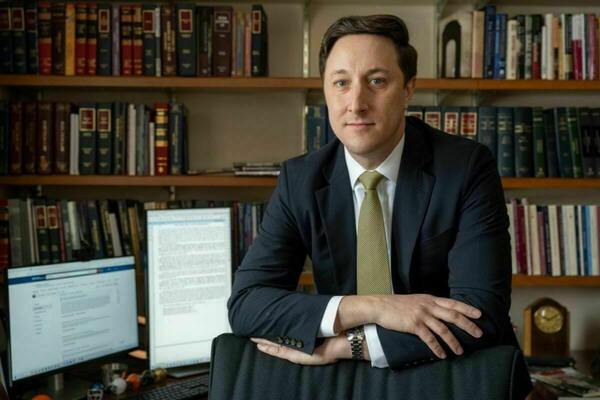
Professor Derek Muller: Shaping Election Law Dialogue as a Scholar and CNN Contributor
As the 2024 presidential election season drew to a close, one name stood out for his expertise in election law: ND Law Professor Derek Muller. Renowned for his research on the administration of federal elections, Muller specializes in the intersection of state laws and federal election rules, including voting rights, election subversion, and judicial oversight. His work focuses on how courts can prevent state officials from undermining election results and on strategies for reducing the growing volume of election-related litigation.
In the months leading up to Election Day, Muller became a sought-after media resource, offering expert analysis on complex legal issues. As a CNN legal contributor, he provided insights and commentary on high-profile cases and legal matters. His insights helped clarify high-profile topics, including Virginia’s voter purge, Elon Musk’s financial contributions to voters, Nevada’s handling of late-arriving ballots, and absentee voting in battleground states. Muller also highlighted how changes to voter rolls and other state actions can create confusion and fuel legal challenges, underscoring the need for clear, consistent election administration.
Muller provided crucial commentary on lawsuits related to the election, discussing eligibility issues such as efforts to remove former President Donald Trump from the ballot and the legal questions surrounding Vice President Kamala Harris's candidacy. Despite his high-profile media role, Muller remains committed to his primary work as a professor and researcher at the Law School. He views his media contributions as a service to both the University and the public, aiming to make complex legal issues more accessible.
Through both his academic work and media appearances, Muller has become a trusted voice on the evolving landscape of election law, offering vital context for understanding how legal frameworks shape American democracy.
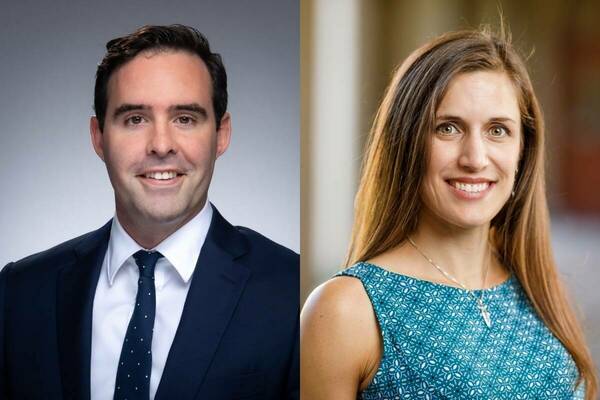
Tenure: Professors Patrick Corrigan and Marah Stith McLeod
In July 2024, Professor Patrick Corrigan and Marah Stith McLeod were granted tenure and promoted to full professors of law.
Patrick Corrigan’s research focuses on how laws and legal institutions shape capital markets and transactional structures, with a focus on issues related to initial public offerings (IPOs), banking, and venture capital. His article, “Footloose with Greenshoes? Can Underwriters Profit from IPO Underpricing?” was selected for reprint by the Defense Law Journal and cited by the U.S. Securities and Exchange Commission in a final rule. His work has also been referenced in SEC final orders and in a policy statement by the Consumer Financial Protection Bureau.
Corrigan teaches business associations, securities regulation, and a seminar on venture capital financings and initial public offerings.
He is a research associate at the University of Amsterdam Center for Law and Economics and serves as a faculty fellow for the Notre Dame Research Program on Law and Market Behavior and the Notre Dame Program on Private Law.
Marah Stith McLeod teaches criminal law, criminal procedure, and plea bargaining. Her research focuses on legal and ethical issues in these areas, with particular attention to the distribution of decisional power in the criminal justice system and the theory and practice of criminal punishment, including the death penalty.
Inspired by twin commitments to human dignity and democracy, McLeod’s scholarship focuses on the rationality, democratic legitimacy, and humanity of American criminal statutes and criminal procedures. She has examined how to make criminal justice decisions more transparent and aligned with public morality and fairness, and has critiqued the routinization of criminal sentencing.
She serves as a faculty fellow for the Lindsay and Matt Moroun Religious Liberty Clinic and as a member of the Executive Committee of the Catholic Criminal Justice Reform Network.

Michael K. Addo advocates for prisoners’ human rights
Michael K. Addo, director of the Notre Dame London Law Programme, gained a deep interest in advocating for the human rights of prisoners during Ghana’s compulsory National Service program, through which he served at the Ghana Prisons Service. There, Addo witnessed firsthand the precarious conditions that prisoners face—an experience that fueled his commitment to pursuing postgraduate work at the intersection of prison reform and human rights.
Today, Addo continues to research safeguarding the human rights of prisoners. He is collaborating with another university and two civil society NGOs in South Africa and the United Kingdom on a comparative study of human rights oversight in private detention facilities. The project examines the structural characteristics of private prisons, the impact on human rights, and pathways to address systemic issues. By contrasting approaches in South Africa and the UK, Addo highlights key differences in prisoner treatment and oversight.
In April 2024, Addo led a conference at the University of Cape Town, titled “Monitoring Privately Run Detention Centres: What We Don’t Know.” Together with project partners, he presented findings on human rights concerns in private prisons and explored mechanisms to improve oversight and accountability. Addo has also facilitated workshops in Johannesburg and London as part of this ongoing work, and aims to support companies in developing policies that uphold human rights in private detention settings.
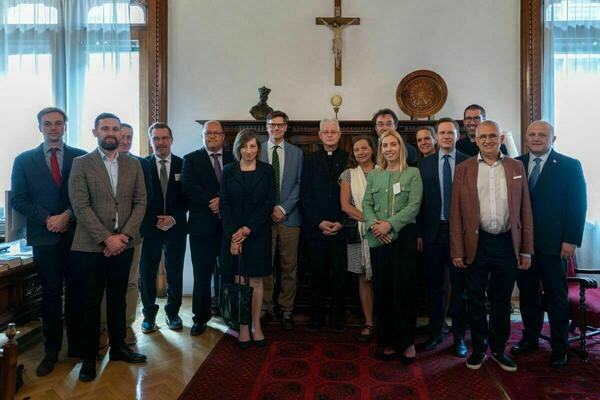
Advances Catholic Legal Education in Central & Eastern Europe
Notre Dame Law School is making a profound impact on Catholic legal education, with a particular focus on Central and Eastern Europe. Last year, the Law School launched an annual gathering that brings together Catholic law faculties and scholars from the region, fostering intellectual exchange and collaboration among those who share Notre Dame’s Catholic mission.
The second St. Catherine’s Circle conference, held in June at Pázmány Péter Catholic University in Budapest, brought together scholars from universities in Croatia, Ukraine, Poland, Georgia, and the United States. Over three days, participants explored the future of Catholic legal education, its distinctive mission, and how it can shape the next generation of lawyers.
The conference was led by Notre Dame Law Professors Jeffrey Pojanowski, Paolo Carozza, Nicole Stelle Garnett, and Rev. Patrick Reidy, C.S.C. “We’re not just exchanging ideas—we’re forging lasting relationships that will strengthen Catholic legal education in our countries,” said Pojanowski.
St. Catherine’s Circle serves as an annual forum for scholars from diverse backgrounds to discuss best practices, research, and teaching methods within a Catholic framework. This year’s conference centered on the role of Catholic identity in student formation, both in and outside the classroom.
The group’s shared mission has led to meaningful partnerships, with universities reflecting on how their Catholic identity informs their approach to legal education. Funded by the Nanovic Institute for European Studies and Notre Dame Law School, the conference has become a cornerstone of the Law School’s international outreach efforts.
Looking to the future, St. Catherine’s Circle will meet annually. Next year’s conference will be hosted by Sulkhan-Saba Orbeliani University in Tbilisi, Georgia. The goal? To continue nurturing this vibrant network and advancing Catholic legal education worldwide.
Notre Dame Law School Celebrates Careers of Former Faculty Members Nell Newton and Gerard Bradley
The Law School honors the time Nell Newton, former Dean, and Gerard Bradley, former Professor of Law, dedicated to Notre Dame. Both retired earlier this year and have left a lasting impact on the Law School and its students.
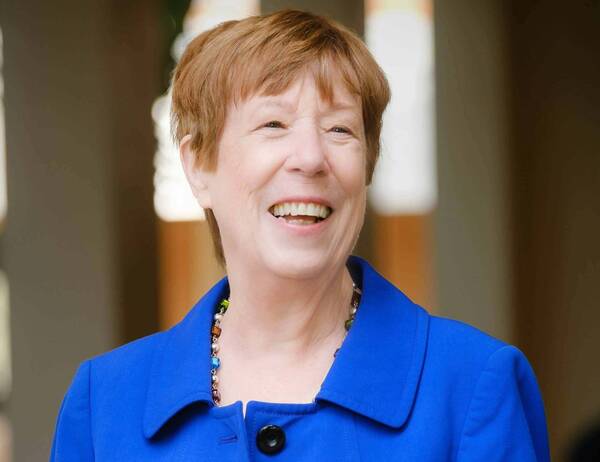
Nell Newton
Nell Jessup Newton’s decade of leadership has left a mark on both the institution and its students. Newton served as the 10th Dean of the Law School from 2009 to 2019.
Newton’s tenure was marked by innovation, growth, and an unwavering commitment to students. She led efforts to expand the faculty, hiring 20 of the current full-time professors and enhancing the curricula in areas like business law, international law, and intellectual property.
In addition to strengthening the academic offerings, Newton focused on providing students with greater opportunities for practical experience. The Law School’s externship programs grew exponentially, from just two to 12, including new locations in Chicago and Washington, D.C. She also spearheaded the development of interdisciplinary programs, such as a dual J.D./MBA degree, and expanded Notre Dame’s international footprint with student exchange programs in China, Chile, and Italy.
Perhaps one of Newton's greatest legacies lies in her work to enhance the well-being of students. She played a pivotal role in expanding the Career Development Office and increasing the Law School’s Loan Repayment Assistance Program by more than 500%. These efforts helped Notre Dame graduates not only find fulfilling careers but also ensure that those pursuing public interest law were supported long after graduation. Beyond her administrative duties, Newton continued to teach during her time as Dean, offering courses in contract law and supervising the D.C. externship program.
Newton’s legacy of thoughtful leadership, academic excellence, and deep care for students will continue to shape Notre Dame Law School. Her tenure not only strengthened the institution’s standing in the legal community but also ensured that Notre Dame Law remains a place where students can flourish.

Gerard Bradley
A scholar, educator, and tireless advocate for the integration of faith and law, Gerard Bradley's influence extends beyond the classroom.
Joining Notre Dame's faculty in 1992, Bradley taught courses in Legal Ethics, Constitutional Law, and Criminal Procedure. He directed the Natural Law Institute with fellow scholar John Finnis and co-edited The American Journal of Jurisprudence, shaping the conversation on legal philosophy for decades. His work, both as a scholar and a mentor, left an impact on the Law School and its community.
Bradley's scholarship explored themes of religious liberty, church-state relations, and morality in the law—topics he has addressed in his numerous books and articles. His writings on Catholic higher education were especially influential, emphasizing the critical role of faith in the practice of law. As he once said, “You see as if face to face,” referring to the comprehensive vision that Catholic legal education provides, equipping students to view law in its fullest moral and natural context.
Bradley’s career also included significant roles outside the classroom. A respected public intellectual, he was frequently called upon to speak at conferences and seminars, including the two-day event hosted by Notre Dame in August 2024 in his honor. The conference gathered peers, former students, and scholars to reflect on Bradley’s contributions to Catholic legal thought.
The conference highlighted his intellectual rigor and faith. Mass was celebrated in the Law School chapel, and panels and presentations were given by Bradley’s peers and former students. Topics of the conference included “Moral Reasoning in Constitutional Adjudication,” “Obscenity Law, Sex Ethics, and Morals Legislation,” “Church-State Relations and the Establishment Clause,” and the “Purpose of Catholic Higher Education.”
Bradley’s influence is a testament to the power of faith-based education and its transformative role in the legal profession. His work will continue to inspire future generations of legal scholars committed to pursuing truth and justice.
The Law School honors additional faculty who retired between 2020 and 2022: Matthew Barrett, Patricia O’Hara, Judith Fox, Warren Rees, and Dwight King.
Notre Dame Law School Recognizes 5 Faculty Members Newly Endowed Professorships
In the past two years, five faculty members have been awarded endowed professorships.

Professor O. Carter Snead has been appointed the inaugural Charles E. Rice Professor of Law. A distinguished faculty member for over 45 years, Charles E. Rice was an expert in natural law, constitutional law, and jurisprudence. Snead, who overlapped with Rice on the faculty, is one of the world’s leading experts on public bioethics—the governance of science, medicine, and biotechnology in the name of ethical goods.

Professor Randy Kozel was named the Fritz Duda Family Professor of Law. Established in 2006 by Fritz and Mary Lee Duda, the professorship is one of many generous gifts from the Duda family. Fritz Duda, a Hesburgh Trustee, received an honorary Doctor of Law degree from Notre Dame in 2009. Kozel’s work focuses on the role of precedent in legal decision-making. He serves as Associate Dean for Faculty Development and Academic Affairs and Faculty Director of the Program on Constitutional Structure.

The new John N. Matthews Professor of Law is Professor Samuel Bray, a leading scholar in the fields of remedies and equity. The professorship was established by Hesburgh Trustee Donald J. Matthews in honor of his father John N. Matthews. Bray also writes about constitutional law, and writes and speaks about national injunctions and other equitable remedies. He is a faculty fellow of the Program on Private Law and the Lindsay and Matt Moroun Religious Liberty Initiative.
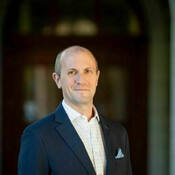
Professor Paul Miller has been appointed the Robert and Marion Short Professor of Law, a gift from the late Robert E. Short and his wife Marion. Short, a member of the Law School Advisory Council, was a longtime supporter of Notre Dame. Miller’s research focuses on private law theory, with an emphasis on jurisprudence and philosophical questions in equity, fiduciary law, trust law, agency, and corporate law. He also serves as Associate Dean for International and Graduate Programs and Director of the Program on Private Law.

Professor Jeff Pojanowski has been named the new Biolchini Family Professor of Law. Pojanowski is a legal expert in the fields of administrative law, jurisprudence, legal interpretation, and torts; his current research focuses on natural law and interpretive theory. The University's Biolchini Family Chair in Law was endowed by Robert F. Biolchini and his wife Frances in 1995.

Faculty Profile: Roger Alford Defends Consumer Rights and Challenges Big Tech
Professor Roger Alford didn’t start his career expecting to challenge tech giants like Google. He was merely drawn to the idea of working on behalf of those harmed by government or corporate abuse. Whether in the classroom, private consulting, or government agencies, Roger Alford would prove to be a staunch defender for consumer rights in the field of antitrust.
“I was fascinated by the possibility of working within institutions that knew how incremental change can occur. Rather than working outside the system to seek to promote positive change, I thought it was better to work inside the system as a lawyer to work for positive change,” he said.
Since 2012, Roger Alford has taught students in the areas of antitrust, international law, arbitration, and transnational civil litigation—but that’s the tip of the iceberg when it comes to his CV.
Early in Alford’s career, he clerked for Judge James Buckley at the D.C. Circuit in the mid-1990s and then worked for the Iran-United States Claims Tribunal in The Hague, Netherlands, resolving claims brought by American companies against the Islamic Republic of Iran. He also spent two years in Zurich, Switzerland, working for an international tribunal that resolved dormant Swiss bank accounts held by Holocaust survivors and their heirs.
From 2017 to 2019, Alford served as a Deputy Assistant Attorney General at the U.S. Department of Justice’s Antitrust Division. In this role, he was responsible for negotiating with dozens of other countries to promote procedural fairness in the enforcement of antitrust laws. “The best and most influential part of the job was negotiating an international agreement with 70 countries to promote fundamental due process in the enforcement of antitrust laws around the world,” Alford said of his time at the Department of Justice. In the spring of 2019, the Department of Justice’s Antitrust Division was a founding member in implementing a new Framework on Competition Agency Procedures, which was adopted by the International Competition Network.
Following his tenure at the DOJ in 2019, he began consulting for the Texas Attorney General in a bipartisan lawsuit brought by 17 states alleging that Google abused its monopoly power in the digital advertising markets. “To have monopoly control over the buy side, the sell side, and the exchange in the middle to harm its own clients is fundamentally problematic,” Alford said of lawsuits against Google in particular.
In 2023 Alford was an expert witness on behalf of plaintiffs in a lawsuit that led to a $1.8 billion judgment and settlement against the National Association of Realtors and the largest real estate brokerage companies. That lawsuit resulted in a fundamental change in how residential homes are bought and sold.
Alford also has testified on numerous occasions before the Senate Judiciary Committee on the anticompetitive conduct of Big Tech companies, the real estate industry, and the credit card industry. “Academics seek to influence policy, so the opportunity to testify before the Senate Judiciary Committee and to work at the Department of Justice are just amazing opportunities to directly influence government policy.”
In addition to Professor Alford’s impressive resume of multidisciplinary accomplishments, he also serves as a faculty fellow for the Kellogg Institute for International Studies, Nanovic Institute for European Studies, Pulte Institute for Global Development, and Notre Dame Law School’s Human Rights Clinic and the Religious Liberty Initiative.