John Nagle
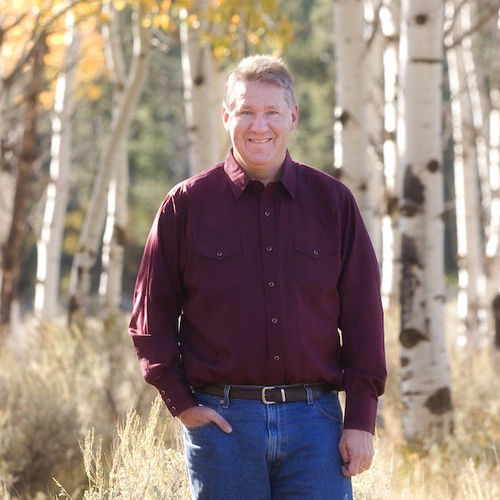
John N. Matthews Professor of Law
John Copeland Nagle was a professor at Notre Dame Law School for more than 20 years.
He passed away on May 18, 2019. (In Memoriam: Professor John Copeland Nagle)
Nagle was named the John N. Matthews Professor in 2005. He joined the law faculty as an associate professor of law in 1998 and became a full professor in 2001. He was the law school’s inaugural Associate Dean for Faculty Research from 2004 to 2007.
Nagle was the co-author of casebooks on “The Practice and Policy of Environmental Law, “Property Law,” and “The Law of Biodiversity and Ecosystem Management. His book “Law’s Environment: How the Law Shapes the Places We Live,” was published by Yale University Press in 2010. His other writings explored such topics as the relationship between environmental pollution, cultural pollution, and other kinds of “pollution;” the role of religion in environmental law; Chinese environmental law; the scope of congressional power to protect endangered species; alternative approaches to campaign finance reform; and the competing roles of Congress and the courts in correcting statutory mistakes. His articles were published in journals such as the Yale Law Journal, the Columbia Law Review, the Michigan Law Review, the University of Pennsylvania Law Review, and the New York University Law Review.
Nagle taught a number of courses related to environmental law, legislation, torts, and property. In 2002, he received a Distinguished Lectureship award from the J. William Fulbright Foreign Scholarship Board to teach environmental law and property law at the Tsinghua University Law School in Beijing. He received another Fulbright award to serve on the faculty of law at the University of Hong Kong in 2008. Nagle lectured on environmental, legislation, and property issues at numerous forums in the United States, Canada, China, England, Hungary, Ireland, Malaysia, and Scotland.
Prior to joining the Notre Dame faculty, Nagle was an associate professor at the Seton Hall University School of Law from 1994 through 1998. He also worked in the United States Department of Justice, first as an attorney in the Office of Legal Counsel where he advised other executive branch agencies on a variety of constitutional and statutory issues, and later as a trial attorney conducting environmental litigation. Nagle served as a law clerk to Judge Deanell Reece Tacha of the United States Court of Appeals for the Tenth Circuit, and he was a scientific assistant in the Energy and Environmental Systems Division of Argonne National Laboratory. He was a graduate of Indiana University and the University of Michigan Law School.
Nagle participated in numerous activities outside of the law school. He served as a member of the executive committee of the Section on Legislation of the American Association of Law Schools, and as a vice chair on the Endangered Species Committee of the American Bar Association’s environmental section. He helped organize the annual meeting of the Law Professors’ Christian Fellowship. He served as an elder in the Presbyterian church and was a member of New City Evangelical Presbyterian Church. He was the faculty adviser for the Christian Law Students, the Environmental Law Students, and Young Life.
Courses Taught
LAW60901, Torts
LAW60906, Property
LAW70314, Legislation
LAW70318, Legislation & Regulation
LAW70349, Environmental Law
LAW70348, Biodiversity and the Law
Climate Change Law
Scenic Law
Scholarship
Books
The Practice and Policy of Environmental Law (Foundation Press 4th ed. 2017) (with J.B. Ruhl, James Salzman & Alexandra Klass)
The Law of Property: Cases and Materials for the Twenty-First Century (Aspen Press 4th ed. 2018) (with James C. Smith & Edward J. Larson)
The Law of Biodiversity and Ecosystem Management (Foundation Press 3d ed. 2012) (with J.B. Ruhl & Kalyani Robbins)
Law's Environment: How the Law Shapes the Places We Live (Yale University Press, 2010).
Questions and Answers on Property (LEXIS Publishing 2003)
Law Review Publications
Congressional Originalism, 18 University of Pennsylvania Journal of Constitutional Law 1 (2017) (with Amy Coney Barrett)
Restoring Grasslands By Restoring Species, 26 Kansas Journal of Law & Public Policy 262 (2017)
An Autopsy of the Clean Power Plan, 44 Ecology Law Currents (2017)
The Original Role of States in the Endangered Species Act, 53 Idaho Law Review (forthcoming 2017)
The War on Coal, 5 LSU Journal of Energy Law & Resources (2017)
Enjoying Katmai, 33 Alaska Law Review 65 (2016)
Humility and Environmental Law, 10 Liberty University Law Review 335 (2016)
Pope Francis, Environmental Anthropologist, 28 Regent University Law Review 7 (2015)
How National Park Law Really Works, 86 University of Colorado Law Review 861 (2015)
The Environmentalist Attack on Environmental Law, 50 Tulsa Law Review 593 (2015)
Wilderness Exceptions, 44 Environmental Law 373 (2014)
Site-Specific Laws, 88 Notre Dame Law Review 2167 (2013)
The Green Harms of Green Projects, 27 Notre Dame Journal of Law, Ethics, and Public Policy 537 (2013)
Good Pollution, 79 The University of Chicago Law Review Dialogue 31 (2013)
Lame Duck Logic, 46 UC Davis Law Review 1177 (2012)
The Clean Air Act and Scenic Landscapes, 88 North Dakota Law Review 571 (2012)
See the Mojave!, 89 Oregon Law Review 1357 (2011)
How Much Should China Pollute?, 12 Vermont Journal of Environmental Law 591 (2011)
Saxe’s Aphorism, 79 George Washington Law Review 1505 (2011)
Pornography as Pollution, 70 Maryland Law Review 53 (2011)
Climate Exceptionalism, 40 Environmental Law 53 (2010)
Discounting China's CDM Claims, 7 Loyola U. Chi. Intl L. Rev. 9 (2009).
The Idea of Pollution, 43 UC DAVIS L. REV. 1 (2009).
The Effectiveness of Biodiversity Law, J. LAND USE & ENVTL L. 203 (2009).
The Evangelical Debate Over Climate Change, 5 University of St. Thomas Law Journal 53-86 (2008).
The Spiritual Values of Wilderness, 36 Environmental Law 955 (2005).
The Appearance of Election Law, 31 The Journal of Legislation 37(2004).
How Not to Count Votes, 104 Columbia Law Review 1732 (2004).
The Lame Ducks of Marbury, 20 Constitutional Commentary 317 (2003-04)
Biodiversity and Mom, 30 Ecology L.Q. 991 (2003).
Textualism's Exceptions, Issues in Legal Scholarship (2002)
Voter's Intent and Its Discontents, 19 Constitutional Commentary 483 (2003)
Choosing the Judges Who Choose the President, 30 Capital University Law Review 499 (2002)
Voluntary Campaign Finance Reform, 85 Minnesota Law Review 1809 (2001)
Moral Nuisances, 50 Emory Law Journal 265 (2001)
Corruption, Pollution, and Politics, 110 Yale Law Journal 293 (2000)
The Worst Statutory Interpretation Case in History, 94 Northwestern Law Review 1445 (2000)
The Recusal Alternative to Campaign Finance Reform, 37 Harvard Journal on Legislation 69 (2000)
The Commerce Clause Meets the Delhi Sands Flower-Loving Fly, 97 Michigan Law Review 174 (1998)
Endangered Species Wannabees, 29 Seton Hall Law Review 235 (1998)
Playing Noah, 82 Minnesota Law Review 1171(1998)
A Twentieth Amendment Parable, 72 New York University Law Review 470 (1997)
CERCLA's Mistakes, 38 William & Mary Law Review 1405 (1997)
Delaware & Hudson Revisited, 72 Notre Dame Law Review 1495 (1997)
Why Chinese Wildlife Disappears as CITES Spreads, 9 Georgetown International Environmental Law Review 435 (1997)
Direct Democracy and Other Hastily Enacted Statutes, 1996 Annual Survey of American Law 535 (1996)
Corrections Day, 43 UCLA Law Review 1267 (1996)
The Missing Chinese Environmental Law Statutory Interpretation Cases, 5 New York University Environmental Law Journal 517 (1996)
Waiving Sovereign Immunity in an Age of Clear Statement Rules, 1995 Wisconsin Law Review 771 (1995)
Newt Gingrich, Dynamic Statutory Interpreter, 143 University of Pennsylvania Law Review 2209 (1995)
CERCLA, Causation, and Responsibility, 78 Minnesota Law Review 1493 (1994)
Severability, 72 North Carolina Law Review 203 (1993)
Opinion Pieces and Selected Commentary
Small mistakes cause big problems, USA Today, November 21, 2006
The last acts of the lame ducks, Chicago Tribune, November 17, 2006
Distortion by the court (ND Only - NetId required), Philadelphia Inquirer, September 26, 2006
Book Chapters
Expectation and Consummation: Law in Eschatological Perspective (with Keith A. Mathison), in Robert F. Cochran, Jr. & David VanDrunen, eds., Law and the Bible: Justice, Mercy and Legal Institutions (InterVarsity Press, 2013)
A right to clean water, in CHRISTIANITY AND HUMAN RIGHTS: AN INTRODUCTION (John Witte, Jr., & Frank S. Alexander, eds., Cambridge 2010).
Christianity and Environmental Law, in Angela Carmela, Robert Cochran & Michael McConnell, Christian Perspectives on the Law (Yale University Press 2001)
Use of Land Serving as Habitat for Rare Wildlife and Plants, in David D. Furman, Casebook on Zoning, Planning & Land Use Law in New Jersey 361 (1996 ed)
Landowner Responsibility for the Cleanup of Hazardous Wastes, in David D. Furman, Casebook on Zoning, Planning & Land Use Law in New Jersey 363 (1996 ed).
Other Publications
The Legal Meaning of Wilderness Character, 21 International Journal of Wilderness 10 (2015)
The Grand Canyon and the Limits of the Law, The Regulatory Review, Jan. 14, 2016, https://www.theregreview.org/2016/01/14/nagle-limits-of-the-law/
What Hath Lynn White Wrought?, 2 Fare Forward 44 (2012)
When the Sky Was Orange, Books & Culture (2005)
The Meaning of the Prohibition on Taking an Endangered Species, Briefly . . . Perspectives on Legislation, Regulation, and Litigation, vol. 1, no. 9 (Sept. 1998)
The Rule of Law in Mainland China, 14 American Asian Review 147 (1996)
Employment Benefits of Urban Synfuels Facilities, Argonne National Laboratory Report ANL/EES-TM-201 (June 1984) (with D.Wernette, K. McCarthy & D. South)
Areawide and Local Effects of Tar Sands Development at the Sunnyside Site in Utah: A Socioeconomic Analysis,Argonne National Laboratory Report ANL/EES-TM-249 (Apr. 1984) (with D.W. South, J.W. Nagle, K.J. Rose & R.C. Winter)
Indian Point Nuclear Power Station: Verification Analysis of County Radiological Emergency Response Plans,Argonne National Laboratory Report ANL/EES-TM-228 (May 1983) (with R. Whitfield)
Regional Socioeconomic Analysis of Tar Sands Development in Utah, Argonne National Laboratory Report ANL/EES-TM-245 (July 1983) (with D. South, J.W. Nagle, & R.C. Winter)
Popular Commentary
Indiana Dunes a deserving lakeshore, not an undeserving national park, South Bend Tribune, February 2, 2019
Scott Pruitt and the Problem of Environmental Distrust, Chicago Tribune, April 30, 2018
Upgrading the Indiana Dunes to a National Park Is a Horrible Idea, Chicago Tribune, December 5, 2017
What We Don’t Want a President to Do, New York Times, November 8, 2016
The Incredible Story of America's National Parks, Fox News, August 25, 2016
The Earth Day Pioneer Nobody Remembers, Scientific American, April 22, 2016
President Obama's Law, CNN. July 25, 2014
Areas of Expertise
- Biodiversity & the Law
- China & the Law
- Cultural Pollution
- Election Law
- Environmental Law
- Global Warming/Climate Change
- Government
- Law & Religion
- Legislation
- Property Law
- Statutory Interpretation
- Torts