O. Carter Snead
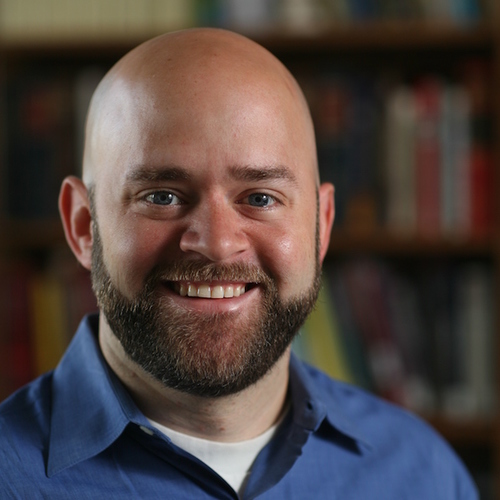
Charles E. Rice Professor of LawDirector, de Nicola Center for Ethics and CultureConcurrent Professor of Political Science
Staff Assistant: Claire Shely
CV: View
SSRN: View
Professor Carter Snead is one of the world’s leading experts on public bioethics – the governance of science, medicine, and biotechnology in the name of ethical goods. His research explores issues relating to neuroethics, enhancement, human embryo research, assisted reproduction, abortion, and end-of-life decision-making.
He is the author of What It Means to be Human: The Case for the Body in Public Bioethics (Harvard University Press, October 2020), which was named by the Wall Street Journal as one of the “Ten Best Books of 2020;” in his review for the same paper, Yuval Levin called it “among the most important works of moral philosophy produced so far in this century.” In May of 2022, it was listed in The New York Times as one of “Ten Books to Understand the Abortion Debate in the United States.” Snead and the book received the 2021 “Expanded Reason Award” (given by Francisco de Vitoria University (Madrid) and the Joseph Ratzinger/Benedict XVI Vatican Foundation), and has been reviewed and discussed in such publications as the Wall Street Journal, The New York Times, New York Post, USA Today, Bloomberg Opinion, Il Foglio, Christian Post, The Review of Metaphysics, American Journal of Jurisprudence, America Magazine, First Things, The New Atlantis, Plough, The Boston Pilot, Public Discourse, Practical Ethics (Oxford University), Legal Ethics Forum, Church Life Journal, Law & Liberty, Angelus News, Mirror of Justice, Crux, Mars Hill Audio Journal, Mercator Net, BioEdge, Front Porch Republic, The National Catholic Register, The American Conservative, Fare Forward, Catholic World Report, The Gospel Coalition, Chronicles: A Magazine of American Culture, The Human Life Review, Eikon, Salvo, The Catholic Thing, The Daily Signal, and National Review.
Additionally, he has written more than 70 journal articles, book chapters, and essays. His scholarly works appear in such publications as the New York University Law Review, the Harvard Law Review Forum, the Vanderbilt Law Review, Constitutional Commentary, Quaderni Costituzionali (Italy’s premier journal of constitutional law), the Yale Journal of Health Policy, Law and Ethics, the Journal of Medicine and Philosophy, and Political Science Quarterly. He is also the editor of two book series for the University of Notre Dame Press – “Catholic Ideas for a Secular World” and “Notre Dame Studies in Bioethics and Medical Ethics.” Snead teaches Law & Bioethics, Health Law, Torts, and Constitutional Criminal Procedure.
In addition to his scholarship and teaching, Snead has provided advice on the legal and public policy dimensions of bioethical questions to officials in all three branches of the U.S. government, and in several intergovernmental fora. Prior to joining the law faculty at Notre Dame, Snead served as general counsel to The President’s Council on Bioethics (Chaired by Dr. Leon R. Kass), where he was the primary drafter of the 2004 report, “Reproduction and Responsibility: The Regulation of New Biotechnologies.” He has testified in the U.S. House of Representatives on regulatory questions concerning RU-486 (the abortion pill). In 2013, he testified in the Texas state legislature on the constitutionality of a proposed fetal pain bill. Snead led the U.S. government delegation to UNESCO and served as its chief negotiator for the Universal Declaration on Bioethics and Human Rights, adopted in October 2005. He served as the U.S. government’s Permanent Observer to the Council of Europe’s Steering Committee on Bioethics, where he assisted in its efforts to elaborate international instruments and standards for the ethical governance of science and medicine. In conjunction with the American Association for the Advancement of Science, he has lectured to state and federal judges on the uses of neuroimaging in the courtroom. He regularly serves as an expert witness on bioethical matters before federal courts.
In 2008, he was appointed by the director-general of UNESCO to a four-year term on the International Bioethics Committee, a 36-member body of independent experts that advises member states on bioethics, law, and public policy. The IBC is the only bioethics commission in the world with a global mandate. In 2016, he was appointed to the Pontifical Academy for Life, the principal bioethics advisory body to Pope Francis. He is also an elected fellow of The Hastings Center, the oldest independent bioethics research institute in the world.
Snead received his J.D., magna cum laude, from Georgetown University, where he was elected to the Order of the Coif, and his bachelor of arts from St. John’s College in Annapolis, Maryland. He clerked for Judge Paul J. Kelly Jr. of the U.S. Court of Appeals for the Tenth Circuit.
Courses Taught
LAW60901, Torts
LAW70359, Constitutional Criminal Procedure
LAW70914, Health Law
LAW73828, Bioethics and the Law Seminar
Scholarship
Books:
Ethics at the Edges of Humanity (under contract with Harvard University Press)
What It Means to be Human: The Case for the Body in Public Bioethics (Harvard University Press 2020)
- Chosen by the Wall Street Journal as one of the “Ten Best Books of 2020.”
- Listed in the New York Times as one of “Ten Books to Understand the Abortion Debate in the United States” (May 5, 2022)
- Winner of the 2021 “Expanded Reason Award,” sponsored by Francisco de Vitoria University (Madrid) and the Joseph Ratzinger/Benedict XVI Vatican Foundation
- Winner of the 2022 “Rupert and Timothy Smith Award for Scholarly Achievement”
- Reviewed and/or featured in the New York Times, Wall Street Journal, New York Post, USA Today, Bloomberg Opinion, Il Foglio, The Quarterly Review of Biology, The Review of Metaphysics, American Journal of Jurisprudence, Ethics and Medicine, Christian Post, First Things, The New Atlantis, Plough, The Boston Pilot, Public Discourse, Practical Ethics (Oxford University), Legal Ethics Forum, Church Life Journal, Law & Liberty, Angelus News, Mirror of Justice, Crux, Mars Hill Audio, Mercator Net, BioEdge, Front Porch Republic, The National Catholic Register, The American Conservative, Fare Forward, Catholic World Report, The Gospel Coalition, Chronicles: A Magazine of American Culture, The Human Life Review, Eikon, Salvo, The Catholic Thing, The Daily Signal, National Review.
Classics of Catholic Culture: An Edited Anthology with Commentaries (edited with Alasdair MacIntyre and Margaret Cabaniss)(under contract with University of Notre Dame Press)
Book Chapters:
“Che cosa è l’uomo perché te ne curi?” Un dialogo a distanza tra l’esperienza giuridica e il pensiero di Mons. Luigi Giussani in Studi su Luigi Giussani nel centenaio della nascita 1922-2022, Comitato per il Centenario (ed.) e Facoltà di Teologia di Lugano (CH) (with Lorenza Violini)(forthcoming 2022).
Fearfully and Wonderfully Made: The Catholic Church’s Position on Abortion, in Alireza Bagheri, ed., Global Positions and Practices, Religious and Legal Perspectives (with Laura Wolk) (Springer 2021).
Technology and the American Constitution in Eloise Scotford, Karen Yeung, and Roger Brownsword, eds., The Oxford University Press Handbook on The Law and Regulation of Technology (with Stephanie Maloney) (Oxford University Press) (2017).
Law, Religion, and the Physician-Patient Relationship in Spirituality and Religion within the Culture of Medicine: From Evidence to Practice (with Michael Moreland) (Oxford University Press) (2017).
The Truth, Goodness, and Beauty of Adoption in Accompanying Life: New Responsibilities for the Technological Era (XXIII General Assembly of the Pontifical Academy for Life)(2017).
The Complexity of Catholicism: Politics and Public Bioethics, in Jason T. Eberl, et al., eds., Contemporary Controversies in Catholic Bioethics (with Michael Fragoso) (Springer) (2017).
Autonomy and Individual Responsibility, in Henk ten Have & Berd Gordijn, eds., Handbook of Global Bioethics (with Kelli Mulder) (Springer 2014).
Human Dignity in U.S. Law, in The Cambridge Handbook on Human Dignity (Roger Brownsword, ed.) (Cambridge University Press 2014) (peer reviewed).
Human Dignity in American Public Bioethics in Human Dignity in Bioethics: From Worldviews to the Public Square (Stephen C. Dilley & Nathan J. Palpant, eds.) (Routledge 2013) (invited contribution) (peer reviewed).
Cognitive Neuroscience and the Future of Punishment, in Constitution 3.0: Freedom and Technological Change, pp. 130-155 (Jeffrey Rosen & Benjamin Wittes, eds.) (Brookings Press 2011) (invited contribution) (peer reviewed).
Articles and Essays:
“Grievously and Egregiously Wrong”: American Abortion Jurisprudence, Texas Review of Law & Politics (with Alyson Cox) (2022).
Understanding Dobbs: The Unbearable Wrongness of Roe and Casey, Church Life Journal (June 2022).
The Case for Overturning Roe (with Mary Ann Glendon), National Affairs, Fall 2021 (2021).
The Anthropology of Expressive Individualism, Church Life Journal, December 1, 2020.
Irreconcilable Differences? Whole Woman’s Health, Gonzales, and Justice Kennedy’s Vision for American Abortion Jurisprudence, 41 Harvard Journal of Law & Public Policy 719)(with Laura Wolk) (2018).
Building Capacity for a Global Genome Editing Observatory: Institutional Design, Trends in Biotechnology, 36 no.8 741-43 (with Krishanu Saha, J. Benjamin Hurlbut, et al.) (2018).
Building Capacity for a Global Genome Editing Observatory: Conceptual Challenges, Trends in Biotechnology, 36 no.7 639-41 (with Krishanu Saha, J. Benjamin Hurlbut, et al.). (2018)
Memory and Punishment, 64 Vanderbilt Law Review 1195-1264 (2011).
Science, Public Bioethics, and the Problem of Integration, 43 University of California, Davis Law Review 1529-1604 (2010), cited in Sherley v. Sebelius, 644 F.3d 388 (D.C. Cir. 2011).
Response to Nicholas Boyle’s “God, Sex, and America: The Decline of the Common Morality,” 3 Journal of Law, Philosophy, and Culture 273-276 (2009) (peer reviewed symposium issue).
Public Bioethics and the Bush Presidency, 32 Harvard Journal of Law & Public Policy 867-913 (2009).
Unenumerated Rights and the Limits of Analogy: A Critique of the Right to Medical Self-Defense, 121 Harvard Law Review Forum 1-12 (2007) (invited response to Eugene Volokh, Medical Self-Defense, Prohibited Experimental Therapies, and Payment for Organs, 120 Harvard Law Review 813 (2007)).
Neuroimaging and the “Complexity” of Capital Punishment 82 New York University Law Review 1265-1339 (2007).
The (Surprising) Truth about Schiavo: A Defeat for the Cause of Autonomy 22 Constitutional Commentary 383-404 (2005) (peer reviewed).
The Patentability of Human Embryos in the U.S. and E.U.: A Comparative Perspective __ Quaderni Costituzionali __ (with Professor Lorenza Violini, University of Milan) (in progress)
The Law and Policy of Embryo Research in America, Human Reproduction and Genetic Ethics (Equinox 2011)(peer reviewed UK journal).
The Limits of Federal Funding for Embryo Research in America: A Recent Conflict, __ Quaderni Costituzionali __ (in draft)
Persone incapaci e decisioni di fine vita (con uno sguardo oltreoceano)(Incapacitated Persons and End of Life Decisionmaking (with an Across-the-Ocean View)), 1 Quaderni Costituzionali 7-34 (2010) (with Andrea Simoncini) (peer reviewed).
Il finanziamento delle ricerche sulle cellule staminali in Europa e negli USA (A Comparative Analysis of E.U. and U.S. Funding Policies for Embryonic Stem Cell Research: Details, Aims, and Effects), 4 Quaderni Costituzionali 834-838 (2006) (translated from English to Italian by Prof. Stefania Ninatti) (invited submission) (peer reviewed).
The Pedagogical Significance of the Bush Stem Cell Policy: A Window into the Nature of Bioethical Regulation in the U.S., 5 Yale Journal of Health Policy, Law & Ethics 491-504 (2005) (peer reviewed) (invited submission) (reprinted in Judith F. Daar, Reproductive Technologies and the Law (Lexis 2012)).
Dynamic Complementarity: Terri’s Law and Separation of Powers Principles in the End-of-Life Context, 57 Florida Law Review 53-89 (2005).
Preparing the Groundwork for a Responsible Debate on Stem Cell Research and Cloning, 39 New England Law Review 479-488 (2005) (keynote address for symposium).
Federal Criminal Conspiracy, 35 American Criminal Law Review 739 (1998) (co-author).
Bioetica Pubblica e Incommensurabilita, Atlantide, Anno VIII, Numero 26, 2/2012 (peer reviewed).
Bioethics and Self-Governance: The Lessons of the Universal Declaration on Bioethics and Human Rights, Journal of Medicine and Philosophy, 34: 204-222 (2009) (invited contribution to symposium issue) (peer reviewed).
A Review of Helena Silverstein’s How Courts Fail Pregnant Minors (NYU Press 2007), 123 Political Science Quarterly 343-345 (Summer 2008) (invited book review) (peer reviewed).
Neuroimaging and Capital Punishment, 19 The New Atlantis: A Journal of Technology and Society 35 (2008)
Neuroimaging, Entrapment, and the Predisposition to Crime, 7 American Journal of Bioethics 60-61 (2007) (invited Peer Commentary) (peer reviewed).
Assessing UNESCO’s Universal Declaration on Bioethics and Human Rights, 7 National Catholic Bioethics Quarterly 53-71 (Spring 2007) (invited essay) (peer reviewed).
Technology and the Constitution, 5 The New Atlantis: A Journal of Technology and Society 61-69 (Spring 2004) (invited essay).
On the Patentability of Genetic Resources (white paper prepared at the request of the Diplomatic Corps of the Holy See) (with Joseph Ganahl) (July 2013).
U.S. Foreign Aid and Bioethics, Federalist Society New Federal Initiatives Project, April 23, 2009 (invited white paper)
Embryonic Stem Cell Research, Federalist Society New Federal Initiatives Project, May 19, 2010 (invited white paper)
Selected Commentary:
The Pro-Life Movement Can’t Stop at the Unborn (with Mary Ann Glendon), The Washington Post, June 29, 2022.
20 Ways the Supreme Court Just Changed America (invited symposium contribution), Politico, June 25, 2022.
Roe Was Very Bad for America. The Court Gives Us A Chance to Reset, CNN Opinion, June 25, 2022.
Abortion Would Be Best Governed by Legislatures, The Economist, June 22, 2022.
The Leak Shows Why Abortion Policy Should Be Returned to the States, The Washington Post, May 5, 2022.
Inhuman Nature, National Review, November 11, 2021.
Critics of Texas’ Convoluted Abortion Law Have A Point. The Solution is to Overturn Roe v. Wade., The Washington Post, September 7, 2021.
A Time for Courage on the Supreme Court, Newsweek, May 20, 2021 (https://www.newsweek.com/time-courage-supreme-court-opinion-1592691).
Statement from Catholic Scholars on the Moral Acceptability of Receiving COVID-19 Vaccines, Public Discourse, March 11, 2021.
To Heal America’s Wounds, We Need to Recall that We Belong to One Another, The New York Post, October 13, 2020.
I’ve Known Amy Coney Barrett for Fifteen Years. Liberals Have Nothing to Fear, The Washington Post, September 26, 2020.
The Way Forward After June Medical, First Things, July 4, 2020 (https://www.firstthings.com/web-exclusives/2020/07/the-way-forward-after-june-medical)
The Supreme Court Should Protect Babies with Down Syndrome, Public Discourse, January 15, 2019 (https://www.thepublicdiscourse.com/2019/01/48245/) (with Mary O’Callaghan)
The Alfie Evans Case is Straight out of a Dystopia, CNN Opinion (https://www.cnn.com/2018/04/29/opinions/alfie-evans-opinion-snead/index.html), April 29, 2018.
Abortion in the U.S.: Actually, its laws are among the world’s most permissive, The Irish Times (https://www.irishtimes.com/opinion/abortion-in-the-us-actually-its-laws-are-among-the-world-s-most-permissive-1.3459718), April 13, 2018.
Why the Pope is Fighting for Charlie Gard, CNN Opinion (http://www.cnn.com/2017/07/13/opinions/pope-and-charlie-gard-snead-opinion/index.html), July 13, 2017.
The Legacy of a Pro-Life Giant, Columbia Magazine (http://www.kofc.org/en/columbia/detail/legacy-pro-life-giant.html), January 1, 2017.
Tim Kaine Chose Power Over Ethics, CNN Opinion (http://www.cnn.com/2016/07/28/opinions/tim-kaine-abortion-opinion-snead/), July 28, 2016.
For SCOTUS, a New Era of Judicial Interference (Commentary on Whole Woman’s Health v. Hellerstedt), CNN Opinion (http://www.cnn.com/2016/06/28/opinions/abortion-distortion-whole-womans-health-carter-snead/), June 28, 2016.
Planned Parenthood Will Forego Payment for Fetal Tissue: So Now It’s Ok Because It’s Free?, Fox News Opinion (http://www.foxnews.com/opinion/2015/10/13/planned-parenthood-will-forgo-payment-for-fetal-tissue-so-now-its-ok-because-its-free.html), October 13, 2015.
It’s Time to Defund Planned Parenthood, Fox News Opinion (http://www.foxnews.com/opinion/2015/07/21/its-time-to-defund-planned-parenthood.html), July 21, 2015.
Here Come the Irish: Notre Dame Marches for Life, Public Discourse, January 26, 2015 (invited essay)
RFRA Post-Hobby Lobby: What Now?, SCOTUSblog, (Supreme Court of the United States Blog), July 3, 2014 (http://www.scotusblog.com/2014/07/symposium-rfra-post-hobby-lobby-what-now/) (invited essay in online academic symposium).
Cline vs. Oklahoma Coalition for Reproductive Justice: Once More unto the Breach, SCOTUSblog (Supreme Court of the United States Blog), September 16, 2013 (http://www.scotusblog.com/2013/09/cline-v-oklahoma-coalition-for-reproductive-justice-once-more-unto-the-breach/) (invited essay in online academic symposium).
The Constitutionality of the Texas Fetal Pain Bill (SB1), Public Discourse, July 9, 2013 (invited essay).
Una Costituzione Bioetica?, Il Sole 24 Ore, January 13, 2013.
Religious Liberty and the Obama Administration, First Things, March 2012 (invited essay).
Op-Ed, Planned Parenthood’s Hostages, Wall Street Journal, February 6, 2012 (with Robert P. George).
Conscience, Coercion, and Healthcare, Public Discourse, September 26, 2011 (with Helen Alvare and Gerard V. Bradley) (invited essay).
Protect the Weak and Vulnerable: The Primacy of the Life Issue, Public Discourse, August 22, 2011 (invited essay).
Op-Ed, Respect for Ethics Enabled Stem Cell Coup, Chicago Tribune, Monday, December 3, 2007, 22 (on new technique for derivation of non-embryonic pluripotent cells).
Op-Ed, Bush Sticks to Principles, Limits Government’s Role, Indianapolis Star, July 24, 2006 (on the veto of a bill seeking to modify the federal funding policy for embryonic stem cell research).
Areas of Expertise
- Constitutional Criminal Procedure
- Constitutional Law
- Criminal Law
- Criminal Law & Procedure
- Law & Bioethics
- Law & Medicine
- Law & Science