Notre Dame Exoneration Justice Clinic Students Participate in Post-Conviction Evidentiary Hearing

During the week of February 10, several student interns from Notre Dame Law School's Exoneration Justice Clinic (EJC) participated in a week-long evidentiary hearing in Columbus, Indiana, on behalf of the EJC’s client, Jason Hubbell. EJC student interns Adam Miller, Megan Sarsfield, Alex Ragland, Autumn Chassie, and Katherine Mojica all participated in the evidentiary hearing alongside staff attorney and term teaching professor Kevin Murphy, legal staff assistant Anne Peterson, legal fellow Lenora Popken, adjunct professor of law Elliot Slosar, and Indianapolis attorney Brent Westerfeld.
In 1999, Hubbell was convicted of murder and criminal confinement based on the 1997 abduction and murder of Sharon Myers in Columbus, Indiana. He was sentenced to 75 years in prison and has served over 25 years in prison. In October 2022, the EJC accepted Hubbell’s case. Hubbell alleges that newly discovered evidence that was withheld by the State of Indiana shows that he was not the person responsible for Myers’s abduction and murder.
The EJC student interns played an important role in both preparing for the evidentiary hearing and presenting evidence and argument in support of Hubbell’s claims. At the hearing, ND Law 3L students Adam Miller and Megan Sarsfield conducted witness examinations, while Alex Ragland, Autumn Chassie, and Katherine Mojica provided critical support. As Murphy explained, “Our student interns did extraordinary work, both in court and behind the scenes, to fight for our client, Jason.”
Professor Jimmy Gurulé, faculty director of the Notre Dame Law School Exoneration Justice Clinic, emphasized that the evidentiary hearing was a powerful experiential learning opportunity for the students. "The Hubbell case is a great example of how the EJC provides law students with real-world lawyering experience," said Gurulé.
The EJC's work is centered around three pillars: advocacy through client-based investigation and litigation, reentry through supporting post-exoneration transition, and prevention through legislative reform to reduce wrongful convictions. Through this work, the EJC strives to provide students with a comprehensive understanding of the criminal justice system. “The EJC is committed to criminal justice reform, litigating wrongful conviction cases, and educating the public about the miscarriage of justice,” said Gurulé.
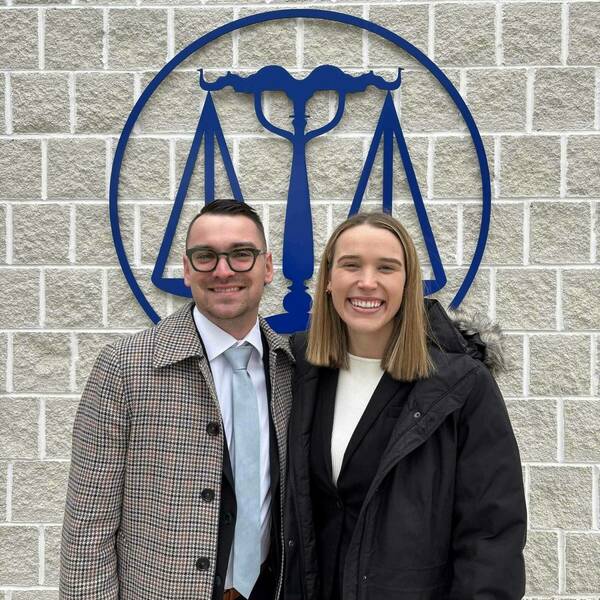
Reflections from the EJC Team
EJC student interns who participated in the hearing shared their experiences and insights.
Adam Miller, 3L
"When I think about law school, I'll remember sitting with Jason Hubbell at counsel table and standing for him on the record. The Exoneration Justice Clinic empowered us to take on this weighty responsibility, and it is truly a privilege to advocate for Jason in this way."
Megan Sarsfield, 3L
“Adam and I have been working on Jason’s case since our 2L fall semester. Everything we have done in those four semesters—helping draft his petition for post-conviction relief and various motions, speaking with witnesses, researching legal issues, participating in strategy meetings, and the like—was to prepare for this evidentiary hearing. I am appreciative of this experience; after all, most law school students do not graduate having conducted a witness examination in court on behalf of an actual client.”
Autumn Chassie, 2L
“I am grateful to have been working on Jason’s case since I began the clinic last fall. At the hearing, I got to see the culmination of not only myself and my teammates' work, but of all the students before me, too. I am proud to represent Jason and be part of such a passionate and intelligent group that makes up this entire clinic.”
Alex Ragland, 2L
“The entire team—including attorneys, legal assistants, investigators, and current and former clinic students—worked so hard in preparation for Jason’s hearing. The other students and I knew the tremendous amount of weight that came with working on Jason’s case, and we took that responsibility seriously. It was amazing to see the realization of all our hard work!”
Katherine Mojica, undergraduate student
"Though I was only recently brought onto Jason’s case, I am honored to have played even a small role in this evidentiary hearing. This experience has been an invaluable learning opportunity—especially as someone who has not yet entered law school. Throughout the week, I had the chance to observe the legal team as they prepared arguments, discussed strategy, and debriefed together after court proceedings. Witnessing their tireless dedication to Jason’s case has been inspiring, and I am incredibly grateful to have been part of this effort."
Learn more about Notre Dame Law School’s Exoneration Justice Clinic at exoneration.nd.edu.