Experts from across the world convene at fifth annual Notre Dame Religious Liberty Summit
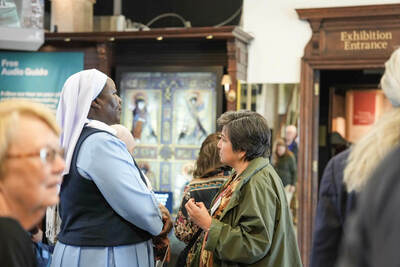
Each year, Notre Dame Law School hosts the Notre Dame Religious Liberty Summit, bringing together expert global scholars, advocates, government officials, and faith leaders for robust discussions on complex global religious liberty issues and the future of religious freedom on the worldwide stage.
This year the fifth annual Notre Dame Religious Liberty Summit featured over 20 speakers in 6 panel discussions on topics such as the suppression of religion in China and Hong Kong, the persecution of Christians worldwide, and combating religious oppression by powerful states. Over 100 leading scholars, faith leaders, and advocates gathered in Dublin, Ireland at the historic Clontarf Castle.
Dean G. Marcus Cole, the Joseph A. Matson Dean and Professor of Law, introduced the theme in his opening remarks.
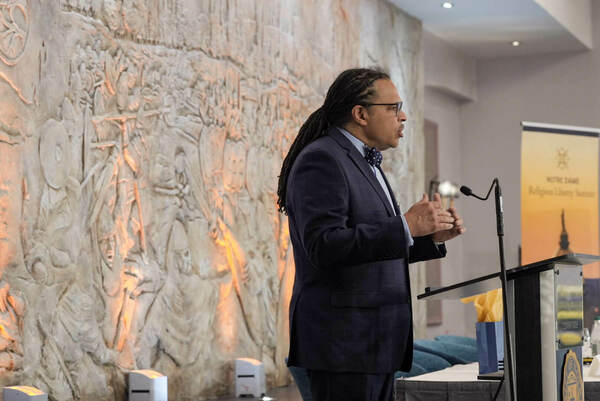
“The theme of this summit is ‘Political Authority, Civil Society, and Religious Freedom’ in recognition of the fact that we need more than legal institutions to make religious liberty a reality in the United States and around the world,” said Dean Cole.
“I'm hopeful that our discussions here will make an impact and advance the cause of religious freedom and freedom of belief, for all people around the world.”
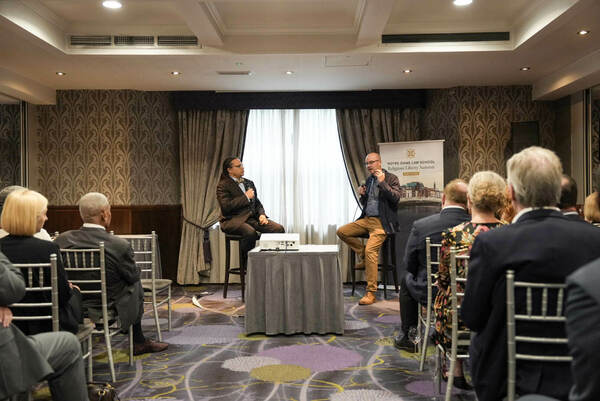
The first day of the summit included a film screening of “Free Exercise: America’s Story of Religious Liberty.” Several of the Summit participants appear in the documentary, providing expert insight into the history, meaning, and intent of the Free Exercise Clause and how it continues to shape America today. The screening was followed by a conversation with Dean Cole and Professor Rick Garnett on the film’s central themes.
“Religion involves action. It’s not just freedom of belief. This freedom involves the exercise of religion, the translating of belief into action in the world,” said Garnett.
The panel discussions collectively explored the rising global threats to religious freedom and the vital role civil society plays in defending it. Experts highlighted how powerful states deploy legal, social, and political pressures to stifle religious belief and practice. Other panels examined how attacks on religious education and faith-based social services undermine civil society’s capacity to protect vulnerable communities and promote pluralism. Together, the conversations underscored the need to resist religious oppression and strengthen the institutions that sustain freedom of conscience around the world.
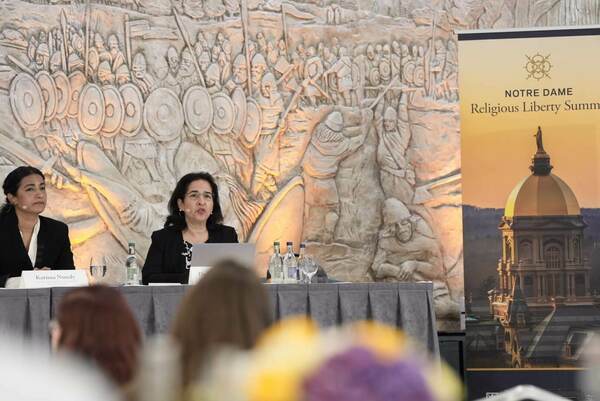
In the first panel, “Suppression of Religion in the Global South,” Dr. Nazila Ghanea, a professor at the University of Oxford, and UN Special Rapporteur on freedom of religion or belief, spoke on the importance of religious liberty for all.
“Freedom of religion or belief relates to everyone, and everybody should enjoy it on an equal basis. The challenge appears to be not so much the lack of legal standards, but poor and diminishing enforcement of those standards.”
In a keynote address, Archbishop Bashar Warda, the Archbishop of Erbil in the Kurdistan Region of Iraq, delivered a message on religious freedom, human dignity, and peaceful coexistence. He recounted the suffering of Iraqi Christians and their resilience. Despite bombings, forced migration, and marginalization, they continue serving all through education, healthcare, and social initiatives.
“Violence must not be met with revenge, but with shared education. If we want to heal our wounds, we must give the next generation the chance to learn together, respect one another, and create a new story for Iraq,” said Warda.
“We are called not just to live beside each other, but to live with each other with mutual respect, shared goals, and deep friendship.”
Additional panels were held on the second day of the summit including, “Combating Religious Oppression by Powerful States” with Mr. Knox Thames (Pepperdine University), Dr. Stephen Schneck (United States Commission on International Religious Freedom), and Professor Svitlana Khyliuk (Ukrainian Catholic University). The session was chaired by Professor Jeffrey Pojanowski. The third panel of the day featured a discussion on "Threats to Civil Society – Religious Education.” Attendees heard from Professor Michael Helfand (Pepperdine Caruso School of Law), Mr. Ignasi Grau Callizo (OIDEL), and Sr. Mary Cecilia Draru (African Sisters Education Collaborative). The session was chaired by Professor Nicole Garnett, an international expert in education law and school choice.
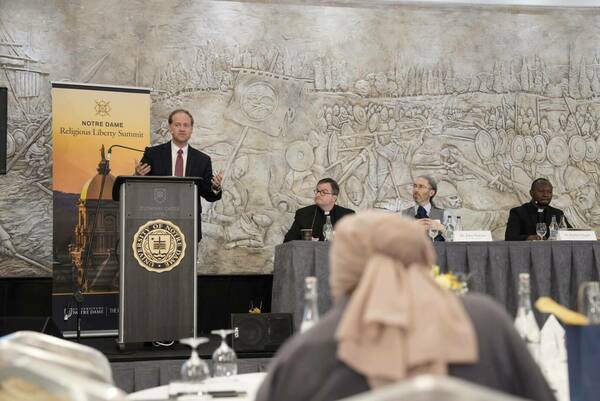
The summit’s final day of academic programming featured a discussion on the “Persecution of Christians Worldwide.” The discussion featured perspectives from Dr. John Newton (Aid to the Church in Need UK), Sean Nelson (Alliance Defending Freedom International), and Fr. Stephen Ojapah (Okedejapah Trauma Victims Initiative), and was chaired by Rev. Wiliam Dailey, C.S.C. The panelists acknowledged the progress made for religious freedom, but the continued need for perseverance into the future.
“I'm very happy to say that there is much greater recognition of the need for religious freedom protections and violations, but to get that brought into law and into a place where governance is very challenged, that's going to take years,” shared panelist Sean Nelson.
"I want to end with a note of hope, because I'm still very hopeful that despite all that people are going through, there is still hope,” said Fr. Stephen Ojapah. There is still light at the end of the tunnel."
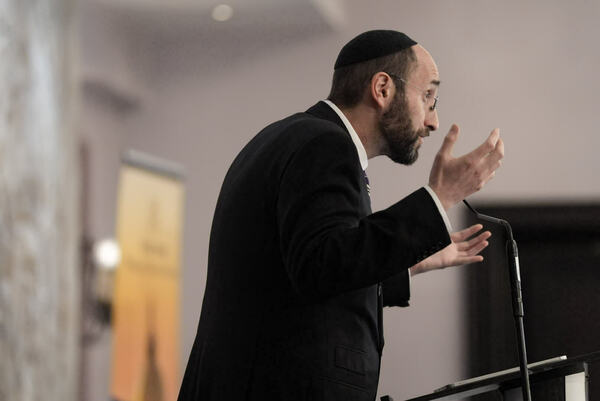
Rabbi Meir Soloveichik of Congregation Shearith Israel delivered a powerful keynote address on final day of the summit. Centering his remarks on the themes of faith and freedom, he drew deeply from the Bible—particularly the Book of Psalms, which he described as a “treasure trove that offers us a window into the interiority of the human being.” He reflected on how biblical teachings continue to shape and resonate with the uniquely American approach to religious liberty.
“America was born of religious difference and the belief that these differences should not be denied, but rather cherished … and kept safe from tyranny,” said Soloveichik.
Additional panels were held during the third day, including “Threats to Civil Society - Religious Social Service Providers” featuring insights from Msgr. Michael Nazir-Ali (Oxford Centre for Training Research Advocacy and Dialogue), Mr. Eric Rassbach (Becket Fund for Religious Liberty), and Dr. Ewelina Ochab (IBAHRI/Refcemi). The session was chaired by Professor John Meiser. Lastly, “Suppression of Religion in China and Hong Kong” offered insights into religious freedom issues in Asia from Dr. Bob Fu (ChinaAid), Ms. Zubayra Shamseden (Uyghur Human Rights Project), and Professor Victoria Hui (University of Notre Dame). The session was chaired by Professor Rick Garnett.
The Summit’s culminating event was the Religious Liberty Awards Dinner held on Wednesday, June 25.
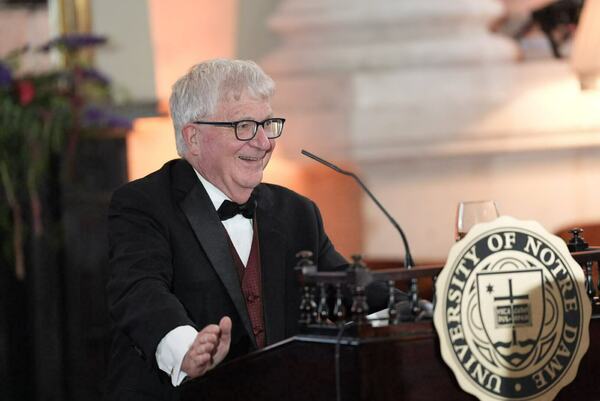
During the dinner, the 2025 Notre Dame Prize for Religious Liberty was presented to Professor Michael McConnell of Stanford Law School.
A former federal judge and influential constitutional scholar, McConnell has shaped religious liberty law through both advocacy and academia. He is a proponent of the importance of securing religious freedom.
“What do I want to conserve? What I want to conserve is this nation's tradition of freedom,” said McConnell. “Not only religious freedom, but religious freedom especially.”
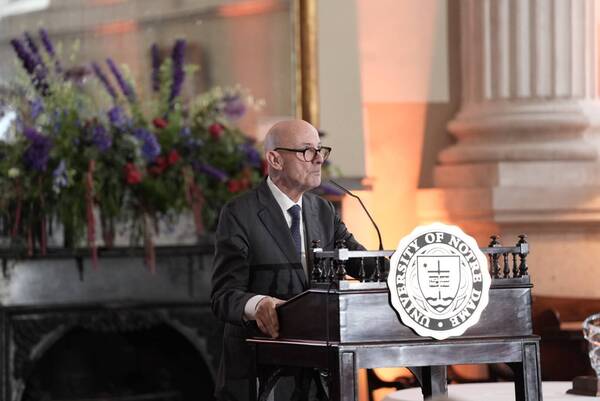
The 2025 Religious Liberty Scholarship Award was presented to Dr. Russell Hittinger ’75 of the Catholic University of America. A leading Catholic intellectual, Hittinger has made foundational contributions to religious freedom, natural law, and Catholic social teaching and he has written and spoken widely on the topic. His latest book is titled, On the Dignity of Society: Catholic Social Teaching and Natural Law.
The Summit also included a number of cultural experiences for attendees, including tours of the Book of Kells at Trinity College Dublin, and the opportunity to visit the Four Courts, which houses the Supreme Court of Ireland. These opportunities for exchange provided a chance for deeper reflection and dialogue among participants, reinforcing the Summit’s central mission.
“If we are to win the case for religious freedom, we cannot settle for winning that case in the court of law,” said Dean Cole. “We must also win in the court of public opinion, and that court is in each heart. We cannot win hearts with reason. We must win hearts with love.”
More stories and news about the 2025 Notre Dame Religious Liberty Summit:
- ND Law presents 2025 Notre Dame Prize for Religious Liberty to Michael McConnell
- 2025 Notre Dame Religious Liberty Summit: Dean G. Marcus Cole’s remarks at Awards Dinner
- 2025 Notre Dame Religious Liberty Summit: Dean G. Marcus Cole’s opening remarks
- 2025 Notre Dame Religious Liberty Summit: Awards Dinner Recap
- 2025 Notre Dame Religious Liberty Summit: Day 3 Recap
- 2025 Notre Dame Religious Liberty Summit: Day 2 Recap
- 2025 Notre Dame Religious Liberty Summit: Day 1 Recap
- ND Law will hold fifth annual Religious Liberty Summit in Dublin, Ireland