A Global Ripple Effect: Notre Dame Exoneration Justice Clinic Expands Access to Justice in Kenya with the Strathmore Legal Aid Caravan

Access to justice remains one of the most powerful pillars of the Notre Dame Law School Exoneration Justice Clinic (EJC), directed by Professor Jimmy Gurulé. In partnership with Strathmore University—Notre Dame Law School’s partner university in Kenya—the EJC is creating what Gurulé calls a “global ripple effect,” extending the fight for human dignity and legal rights far beyond U.S. borders. Last semester, the EJC students joined the Strathmore Legal Aid Caravan, a grassroots outreach initiative that brings legal education, awareness, and services directly to communities living far from formal legal services and representation. The Caravan takes place every November and spans five days, reaching rural regions where residents often have little or no access to the legal system. This work will continue as an ongoing, annual commitment.
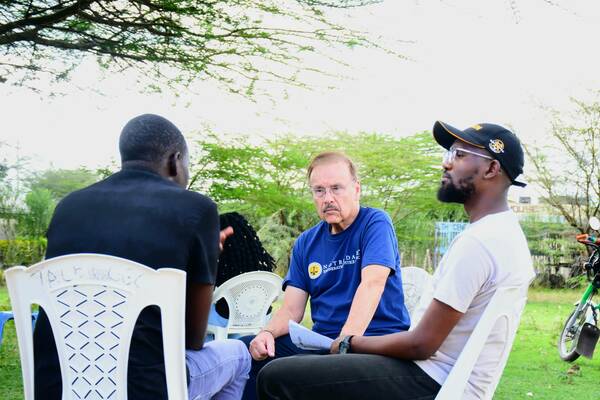
In November 2025, Professor Gurulé and two third-year law students, Albert Kwon and Ava Moreno, traveled to Narok County, Kenya, visiting communities across the Narok East and Narok West sub-counties. Alongside members of the Strathmore Law Clinic, they listened to the stories of the Maasai People, educated residents about their legal rights, and conducted formal intakes of cases from individuals seeking assistance. Community members shared issues ranging from family and property disputes to gender-based violence and environmental concerns. The Caravan also assessed community understanding of the Kenyan Constitution and the legal protections it guarantees, and facilitated human rights training sessions to deepen legal awareness and answer questions.
Over five days, the team spoke with roughly 100 residents each day—many of whom had never received legal counseling in their lives. “In many cases, you can just see the relief when they leave these counseling sessions,” said Gurulé. “That was therapeutic in and of itself, to provide them some hope that their issues would be addressed.”
For several residents, one of the greatest barriers to justice is legal invisibility. With a Constitution that is only about 15 years old, countless Kenyans remain unaware of the rights they possess or how to assert them. Without that knowledge, they are vulnerable to misinformation, exploitation, and systemic inequality. The Strathmore Legal Aid Caravan helps change that reality. By offering one-on-one counseling, community education, and pathways to continued legal support, the EJC helps ensure that individuals are not only heard—but that they are also empowered.

Third-year law students Albert Kwon and Ava Moreno described their experience as “life-changing,” emphasizing how proximity—sitting with the Maasai People, listening to their stories, and helping them navigate the law—deepened their understanding of legal advocacy, access to justice, and human dignity in profound ways.
After their trip, Albert and Ava delivered a comprehensive presentation to the entire EJC class, reflecting on key takeaways, observations, and the legal issues the Caravan addressed. Albert shared, “I think everyone in the EJC at this point has been on at least one client visit. I don’t know if you’ve noticed it, but the first expression, in many cases, is a face of relief, and it is somewhat a face of hope. It’s a feeling that I have never forgotten from my first client visit. For this trip, imagine seeing that same reaction possibly hundreds of times over the course of one week.”
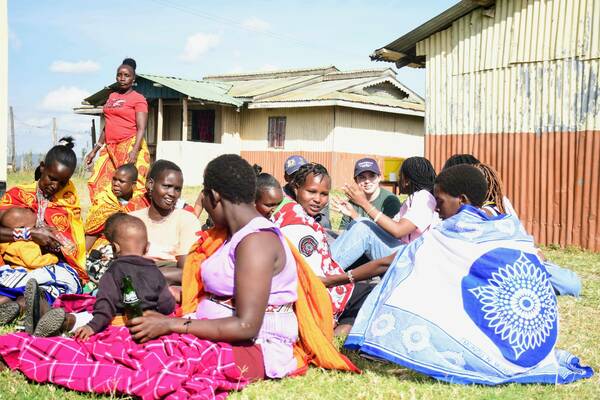
Ava recalled meeting a woman who volunteered as a translator for the Caravan. The woman shared that she was a survivor of female genital mutilation and that serving as a translator gave her the opportunity to receive legal education for the first time. She told Ava that she had never felt so empowered and encouraged the EJC to continue this work and reach even more remote communities so that others could understand their rights under a still-young Constitution.
“My biggest takeaway is that access to justice is so important and it’s never going to stop,” said Ava. “I think that woman really exemplified that this opportunity is so amazing, and we have to keep providing that access to justice with the same energetic and passionate outlook.” Her encounter with the volunteer translator reinforced the urgent need for education, advocacy, and sustained presence.
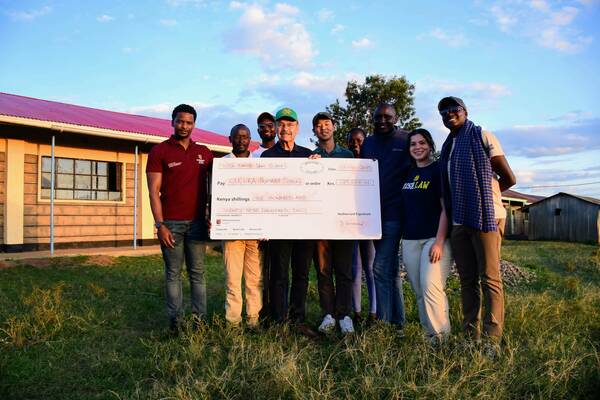
At the heart of this initiative lies another essential dimension: service beyond the courtroom. During their trip, Professor Gurulé, Albert, and Ava visited Karuka Primary School, where Notre Dame Law School made a donation to support repairs to the school’s water gutters. The Law School also plans to assist with future solar panel repairs. These efforts underscore that access to justice is not only about resolving legal disputes, but also about improving daily life, fostering human dignity, and strengthening community resilience.
At its core, the EJC in Indiana and the Strathmore Law Clinic in Kenya share a common mission advanced through the Strathmore Legal Aid Caravan: building life-changing human connections as lawyers and law students meet face-to-face with those denied access to justice, listen to their stories, and help them navigate the law with dignity and hope.
Notre Dame Law School’s fight for justice is not theoretical; it is lived, shoulder-to-shoulder, with communities around the world. It demonstrates real-world problem-solving, cultural humility, measurable social impact, and a commitment to ensuring that legal education serves and empowers communities far beyond the courtroom. The Strathmore Legal Aid Caravan serves as a powerful extension of Notre Dame Law School’s mission to “educate a different kind of lawyer”—one grounded in service, dignity, and global solidarity.