The Specialists: Article I Federal Court Judges
Most people picture the federal judiciary system as a single highway leading from trial and appellate courts straight to the Supreme Court. Yet alongside that familiar pathway runs a smaller network of specialty courts focused on narrow areas of the law.
Many Notre Dame Law School graduates have served on these federal specialty benches. They bring both judicious rigor and constitutional responsibility to highly intricate legal issues, including tax disputes, veterans’ claims, and military justice.
Judges serve 15-year terms rather than lifetime appointments like other federal courts. That means a steady flow of independent thinking, fresh perspective, and accountability flows into these courts, keeping them dynamic and responsive.
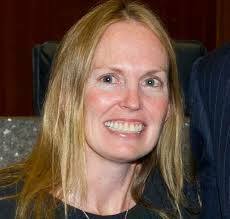
Balancing Tax Collection and Taxpayer Rights: Kathleen Kerrigan
For Judge Kathleen (Sullivan) Kerrigan ’90 J.D. tax law is about more than just numbers. It’s about fairness, facts, and a deep understanding of complex tax rules set by Congress.
Kerrigan was appointed to the U.S. Tax Court in 2012 and served as chief judge from June 1, 2022 to May 31, 2025. She brought decades of experience in legislation and private practice to the highly specialized court.
Taxpayers submit more than 20,000 disputes with the Internal Revenue Service to the Tax Court for judicial review each year. Cases can range from individuals with very small dollar amounts at issue to international corporations challenging multi-billion dollar deficiencies.
“Everyone can get their day in court,” Kerrigan said. “The Tax Court gives taxpayers an opportunity to tell their story and have their evidence in the record.”
Cases often settle. Trials can range from under 30 minutes to over two months. Kerrigan credits her 15 years of working for members of the tax writing committees. She served as legislative director for Congressman Richard Neal and tax counsel for Senator John Kerry before her federal appointment.
“I learned to be a generalist,” she explained. “Tax touches all aspects of life.”
Kerrigan’s sense of fairness, integrity, and respect for the law traces back to her days at Notre Dame Law School. That’s where she embraced the ethos of a “different kind of lawyer.” The practice of law is not static, Kerrigan learned. It evolves. That means Kerrigan takes a nimble approach to the law while maintaining a practical mindset.
It’s all about “striking the right balance,” she said.

Bringing Civilian Oversight to the Military Justice System: Margaret (Meg) Ryan
Many people may see rules and regulations as rigid or complicated. Judge Meg Ryan ‘95 J.D. sees them as the foundation of justice and shape her approach to the judicial process.
Ryan brought a principled approach to the law and a sense of fairness, integrity, and reasoned judgment to every case when she served on the U.S. Court of Appeals for the Armed Forces. Her 15-year term as a judge ended in 2020, and she continued as a senior judge until 2025.
The appeals court serves as a key bridge between the military justice world and the broader federal judiciary. It hears appeals from courts-martial and other military justice proceedings under the Uniform Code of Military Justice.
For Ryan, service on the federal bench was a natural extension of her decade-long service in the U.S. Marine Corps. That’s where she served as a judge advocate general, trial counsel, and aide-de-camp before returning to civilian life in 1999.
Clerkships with Justice Clarence Thomas and Judge J. Michael Luttig strengthened her approach to decision-making and adherence to limitations placed on judges by statute and the Constitution.
Notre Dame Law School also gave Ryan a keen sense of justice as well as the courage and conviction to act in the interest of justice even when it is not easy.
“Notre Dame mirrored the values my parents and the Marine Corps taught me to aspire to—honor, courage, and commitment, God, country, Notre Dame,” she said. “My approach to the law has been the same. I strive to always act in a principled fashion and follow the rule of law.”
Ryan now serves as director of the Division of Enforcement at the U.S. Securities and Exchange Commission. She is leading the agency’s largest division, charged with pursuing misconduct in U.S. securities markets.

Ensuring Veterans Get the Benefits They’ve Earned: Joseph Falvey Jr.
For Judge Joseph Falvey ‘81, ‘87 J.D., public service is part of his DNA. He is a 30-year veteran of the U.S. Marine Corps and part of a multi-generational family that has a storied history of military service.
As a civilian now, Falvey continues to serve his country and its veterans as a judge of the U.S. Court of Appeals for Veterans Claims. To serve in a court devoted to veterans’ rights is the capstone of his career, he said.
“It allows me to practice law in a court that is devoted to those Americans who have sacrificed greatly for our freedoms and our country,” said Falvey, who was appointed to the bench in 2018.
The court gives veterans a chance to appeal decisions made by the Board of Veterans’ Appeals (BVA) regarding benefits and disability claims. That means a veteran who believes the BVA erred in a claims decision has an impartial federal court to review that decision.
For Falvey, the law is more than a career. It is a calling. His years at Notre Dame instilled in Falvey “the importance of devoting oneself to a life of service, whether it be service to the family, the community, or the nation,” he said.
Falvey also learned tenets that are at the core of his judicial philosophy from Professors Charles E. Rice, Edward J. Murphy, John Attanasio, Douglas Kmiec, and Walter Pratt.
“The role of the judiciary is to faithfully interpret and apply the law,” he said. “Say what the law is, not what it should be, exercising judgment, not will, to paraphrase Alexander Hamilton and John Marshall.”
Judges like Kerrigan, Ryan, and Falvey set a high standard for reasoned judgment, fairness, and respect for the law in these specialized courts. Their rulings will continue to shape how justice is carried out for years to come.
Additional Specialty Judges from ND Law
John J. Hargrove ’67 J.D.
Judge, U.S. Bankruptcy Court,
Southern District of California (Ret.)
Michael E. Ridgway ’81 J.D.
Judge, U.S. Bankruptcy Court,
District of Minnesota (Ret.)
Lisa M. Schenck ’89 J.D.
Chief Judge, U.S. Court of Military Commission Review
Gregg W. Zive ’73 J.D.
Judge, U.S. Bankruptcy Court,
District of Nevada (Recalled)
- Written by Melinda McNamera