Serving Those Who Served: Law School Launches Veterans Law Clinic
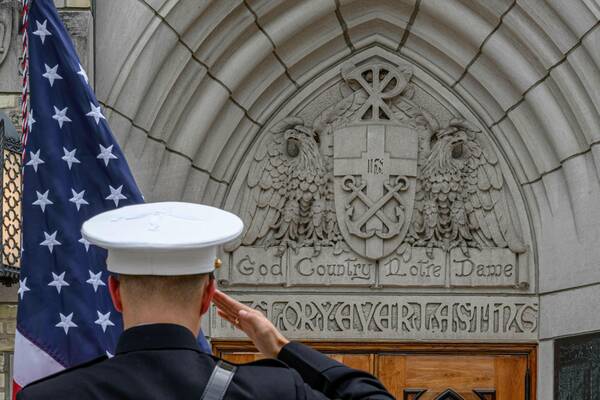
In the fall of 2025, Notre Dame Law School officially opened its newest legal clinic, the Veterans Law Clinic, dedicated to providing legal assistance to U.S. military veterans while preparing law students to become service-driven attorneys. Directed by associate clinical professor of law Caleb Stone, who previously taught at William & Mary Law School and co-directed the Lewis B. Puller Jr. Veterans Benefits Clinic, Notre Dame’s new clinic is giving students the chance to advocate for veterans navigating the often-complicated system of disability benefits.

Every year, thousands of veterans file disability claims with the U.S. Department of Veterans Affairs (VA), seeking compensation for medical conditions connected to their service. For many, the process is long, complex, and difficult to navigate without legal help. When veterans go unrepresented, the likelihood of receiving the benefits they deserve is significantly diminished.
“The difference between being represented and being unrepresented is massive,” said Stone. “Good representation can be the difference between winning and losing—and for veterans, that difference can mean whether they receive health care and financial support essential to their daily lives.”
The Veterans Law Clinic seeks to fill this gap. By offering pro bono representation in disability claims and appeals, the clinic ensures that veterans, particularly those who may not otherwise have access to legal counsel, have advocates on their side.

Building on a Tradition of Service
The creation of the Veterans Law Clinic was years in the making. Students in Notre Dame’s Military and Veterans Law Society, along with alumni and faculty supporters, were instrumental in laying the foundation.
“Notre Dame has always been a military-friendly place,” said Stone. “If it weren’t for the Navy, the University might not exist as we know it today. Combine that history with our Catholic mission of service, and a clinic like this makes perfect sense.”
That combination of mission and history has generated overwhelming support. Faculty, students, alumni, and community partners have rallied behind the clinic, offering resources, referrals, and strong encouragement.
In its inaugural semester, nine law students were enrolled in the clinic, not including three undergraduate students eager to volunteer in support of the clinic. Under Stone’s supervision, they are conducting client interviews, gathering evidence, drafting briefs, and preparing appeals.
Robert Rizzo, a second-year law student and a graduate of the United States Military Academy West Point, has come to understand and appreciate the unique culture, values, and challenges that come with uniformed military service as a veteran himself.
“After my time in the Army, I, like many other service members, grappled with the complex and often intimidating process of applying for VA disability compensation,” said Rizzo. “The Veterans Law Clinic offers me a unique opportunity to draw on my experiences, both during and after service, to blend my military background with my legal education to achieve positive outcomes for fellow veterans.”
“The students are driving the clinic,” said Stone. “They’re the face of the clinic to the outside world. They’re doing the reading, the writing, the client contact, and through that process, they’re learning that this work isn’t about them. It’s about serving a higher purpose.”
“Up until this point in my law school career, much of my learning had been conceptual, but sitting down with a veteran and hearing his story firsthand made the work feel tangible. It gave me an understanding of the real-world impacts of legal advocacy and added a new dimension to my sense of purpose as a future lawyer,” said Rizzo.
Expanding Reach and Vision
Beyond individual cases, students are also tasked with community outreach. Working in small teams, they are building partnerships with veterans service organizations, VA medical centers, and state agencies to raise awareness of the clinic and expand its reach. The clinic’s core work focuses on helping veterans secure disability compensation, but its vision extends further. Stone plans for the clinic to eventually take on cases involving military disability retirement, collaborate with local veterans treatment courts, and contribute to policy advocacy at state and national levels.
Although the clinic is rooted in serving veterans in Indiana and the surrounding region, its scope is national. Within weeks of opening, the clinic had already received applications from veterans across the country.
The Veterans Law Clinic represents more than just a new program. It embodies the University’s motto of “God, Country, Notre Dame” and the Law School’s commitment to “educating a different kind of lawyer.”
“Working with veterans reminds students that the law is a vocation,” said Stone. “It’s not just about personal achievement or financial success. It’s about service. Veterans have made sacrifices for a higher purpose, and representing them gives our students the chance to do the same.”
As the clinic grows, Stone envisions Notre Dame becoming a national leader in veterans legal advocacy. Plans are underway to expand, increase the clinic’s caseload, and build on partnerships with local and national organizations.
Ultimately, Stone believes the Veterans Law Clinic can become the best of its kind in the country. “We have the support, the resources, and the mission,” said Stone. “Notre Dame is uniquely positioned to lead in this space, and I think we can make a tremendous impact.”