In the Matter of Karen Ann Quinlan: A Decision 50 Years Ago Changed the Right to Die
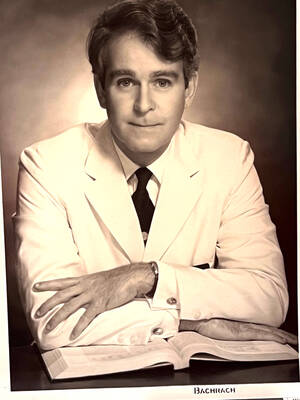
Three Notre Dame Law School graduates, Paul Armstrong ’73 J.D., James Crowley ’72 J.D., and Thomas Curtin ’68 J.D., were at the center of the Quinlan case that in 1976 set legal precedent in end-of-life choices. This year marks the 50th anniversary of that landmark decision.
Few people in the 1970s questioned their right to live privately or refuse medical treatment. Most wanted simply to be left alone to live life their own way. When illness struck, they trusted their doctors to decide what could and should be done.
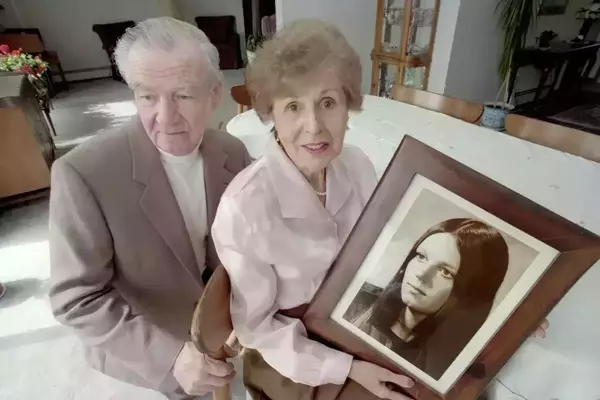
Then came the case of Karen Ann Quinlan, a young woman in a persistent coma whose parents asked doctors to remove a respirator and let her die with grace and dignity. The request conflicted with medical ethics and challenged who had the right to decide when to end medical care.
Quinlan's doctors also questioned if the withdrawal of life support constituted homicide. Would the law interpret the act as intentionally causing a patient’s death?
The case forever changed the way people talk about dignity, faith, and choices at the end of life. It also led to huge shifts in the legal landscape regarding the right to refuse life-sustaining care and the right to privacy in medical decisions.
“The questions at the heart of the case about patient autonomy were important at the time, and have become even more important over the years,” said Crowley.
Navigating Uncharted Territory

Initially, the Quinlans petitioned the New Jersey Superior Court to end Karen's life support, but it was denied. The court also denied a request to turn guardianship over to Karen's father, which would allow him to make decisions on her behalf.
That's when the state Supreme Court agreed to hear arguments, bypassing appellate courts.
The Quinlan case sparked an international debate over questions few people wanted to ask: What is death? What is life?
It also changed the lives of three young attorneys who answered the call to serve. Law school classmates Armstrong and Crowley served as pro bono co-counsel in the landmark case. They brought a deep conviction that dignity and compassion belong at the heart of the law.
Curtin served as Karen’s court-appointed guardian. He leaned on his legal training and Catholic faith to protect Karen's interests and safety throughout the legal proceedings.
“My parents always quoted a variation of the line: ‘God gave you two hands, one to help yourself and one to help others,’” said Curtin. “This was one of those times where I felt that God gave me a hand to help other people.”
A Matter of Privacy and Individual Choice

Armstrong was just two years out of law school and in private practice when Karen's father, Joe, approached him for legal help. Karen had been in a persistent vegetative state for nine months. The family felt it was time to remove their daughter from the machines that were helping her breathe and let nature take its course.
As lead attorney in the case, Armstrong found no specific legal precedent to follow.
“There was no legal precedent for this kind of case, at all, anywhere,” he remembered. “And I thought to myself, ‘This is likely going to have much larger ramifications for law, medicine, and a family’s right to make medical decisions about end-of-life issues.’”
Instead, he turned to Griswold v. Connecticut (1965) and Roe v. Wade (1973) to create a legal framework around a right to privacy and personal autonomy. While those decisions were contrary to Catholic doctrine, they articulated a right to privacy that had implications for the Quinlan case.
Armstrong argued that the right to privacy articulated in Griswold and Roe could be applied to end-of-life decisions. He also pointed to common law that a person could not be required to receive medical treatment without their permission or informed consent.
Another key question was who should be able to make a decision for a person who couldn't express their own wishes? Crowley drew from cases that considered guardianship and relationships between individuals and healthcare providers to develop his moral-ethical argument.
“We developed the idea of closeness, particularly familial closeness," said Crowley. "Those closest should be able to apply judgment or interpret the wishes of persons not able to express their own desires.”
Confluence of Court and Church
Beyond the legal questions that needed answers, the Quinlan case intersected with questions about religious values and morals. Karen’s parents were devout Catholics. They wanted to make sure the legal decision aligned with the tenets and teachings of the Church, explained Crowley, who had earned degrees in theology and Church law.
All three attorneys shared the Quinlan family's deep Catholic faith. They sought guidance from a cadre of bishops and think tanks on bioethics to consider the moral and ethical ramifications of the case.
A New Jersey conference of bishops filed an amicus brief, supporting the family’s decision to stop the extraordinary means to keep Karen alive. The brief stressed that human dignity includes the right to die a natural death when treatment offers no hope of recovery.
The Landmark Decision

Seven judges sat on the New Jersey Supreme Court in 1976 to hear the Quinlan case. They handed down a unanimous decision that Karen had the constitutional right to refuse medical treatment since she had no reasonable possibility of recovery. They also ruled that her right of privacy, which afforded her the power to make that decision, could be exercised by her guardian and family on her behalf.
Joe Quinlan was granted full legal guardianship power by the court and withdrew his daughter from the life-sustaining ventilator. Karen continued to breathe on her own for another nine years, dying in 1985.
Quinlan remains a cornerstone of the rule of law and bioethics. It gave the U.S. Supreme Court an opportunity to address the right-to-die law at a national level in Cruzan v. Director, Missouri Department of Health (1990).
Beyond legal precedent, the decision continues to shape how we talk about dignity, faith, and choice at the end of life.
A Lasting Legacy

an Annual Meeting of the Pontifical Academy for Life
The three Notre Dame alumni went on to lead robust legal careers that partially integrated with healthcare and medicine.
Armstrong, who later served as a judge on the New Jersey Superior Court, is an internationally recognized expert on end-of-life issues and bioethics. He recently completed a 68-page law review article examining the extensive legal influence of the case.
"The hospice movement emanated from the Quinlan case,” said Armstrong. “It became a guiding principle for how we care for one another at the end of life.”
Crowley is a long-term board member of the U.S. National Catholic Bioethics Center. He led a robust legal career in international corporate, securities, and insurance law.
Curtin continues to practice law in New Jersey. His deep respect for the law is reflected in his service on the New Jersey State Bar Association, Association of the Federal Bar, and Board of Governors for the American Bar Association.
“Lawyers help people solve problems,” said Curtin. “And I’m grateful I got to play a small role in a case that had such significant impact.”