Faculty Briefs
Tenure: Professors Sadie Blanchard and Sherif Girgis
In July 2025, Professor Sadie Blanchard and Sherif Girgis were granted tenure and promoted to full professors of law.

Sadie Blanchard’s research examines how legal institutions interact with social forces to shape behavior, especially in markets.
Her article “Contract or Prison” was recognized by the Law and Political Economy Project as one of the best new articles about law and political economy. Blanchard also authored “Contracts Without Courts or Clans: How Business Networks Govern Exchange,” which was featured on the Business Law Scholarship Podcast and was recognized as the runner-up for the Best Paper Award at the History of Insurance in Global Perspective international conference.
She teaches contracts, corporations, and international business transactions and also leads the Law School’s Private Law Workshop.

Sherif Girgis teaches constitutional law, criminal law, and jurisprudence. His scholarly work focuses on constitutional law and theory. His article “Living Traditionalism,” which examines the Supreme Court’s reliance on historical practice in constitutional interpretation, was published in the New York University Law Review, profiled in the New York Times, and cited in an opinion by Justice Brett Kavanaugh.
Girgis has published widely on constitutional rights, with articles appearing in leading law journals. He is also the coauthor of “What Is Marriage? Man and Woman: A Defense,” cited in a dissenting opinion in United States v. Windsor. He is currently completing a Ph.D. in philosophy at Princeton University.
Notre Dame Law School Welcomes New Clinical Faculty Members

Grace Mills ’15 J.D. has joined the Law School as an associate clinical professor of law and director of the Intellectual Property Clinic. She previously served as a partner at Finnegan LLP in Washington, D.C., representing clients in district courts, before the U.S. Patent and Trademark Office, and in the U.S. Court of Appeals for the Federal Circuit. She clerked for Chief Judge Kimberly Moore of the Federal Circuit and earlier worked as a patent agent, drafting and prosecuting patent applications before the USPTO. Mills earned her JD from Notre Dame Law School and a BS in electrical engineering from Northwestern University.

David Pruitt has assumed a new role as associate clinical professor of law and will serve as the faculty director of the Law School’s Eviction Clinic. Pruitt has been with Notre Dame Law School since 2017, previously serving as director of the Clinical Law Center and overseeing the Eviction Clinic. Before joining the Law School, he practiced in law firms in Washington D.C. and South Bend. A double Domer, Pruitt earned his BBA in finance from the University of Notre Dame and his JD from Notre Dame Law School.

Ashley Sanchez has joined the Law School faculty as an associate clinical professor of law and director of the Law School’s Immigration Law Clinic. She previously served as supervising attorney at Catholic Charities Immigration Legal Services in Cleveland, Ohio. She also practiced in the Mergers and Acquisitions group at Jones Day, where she participated in the firm’s Laredo Project at the U.S.-Mexico border. Sanchez earned her JD from the University of California, Berkeley, School of Law and dual BA degrees in Spanish and International Studies from Ohio University.

Caleb Stone has joined the Law School faculty as an associate clinical professor of law and director of the Law School’s new Veterans Law Clinic. He previously served as professor of the practice at William & Mary Law School, where he co-directed the Lewis B. Puller Jr. Veterans Benefits Clinic, helping clients secure more than $6 million in past-due benefits and over $40 million in lifetime expected benefits. He also co-created and directed a certificate program on disability compensation, William & Mary Law School’s first significant online education initiative. Stone earned his JD from William & Mary Law School and a BS in Political Science from Kennesaw State University.

Moreau First-Year Seminar at the Heart of Notre Dame’s Mission
The Moreau First-Year Seminar—a signature part of undergraduate education at the University of Notre Dame—integrates academic rigor with personal growth, inviting students to reflect on perennial questions about worth, purpose, and relationships with others, the world, and God. Inspired by Notre Dame’s Catholic mission and sacramental vision, the course cultivates a sense of community through engagement with diverse texts, contemporary authors, and co-curricular experiences. The fall 2025 Moreau faculty cohort consists of more than 100 faculty from diverse units across campus, including four members of Notre Dame Law School: Dean G. Marcus Cole, Professor Richard W. Garnett, Professor Jeffrey Pojanowski, and Brett Cavanaugh, who serves as the transactional legal fellow for the Lindsay and Matt Moroun Religious Liberty Clinic.
Notre Dame Law School Celebrates Careers of Faculty Members:
Jay Tidmarsh and Bob Jones
The Law School honors former professor of law Jay Tidmarsh and former associate dean and professor Bob Jones for their years of dedicated service to Notre Dame. Both retired earlier this year, leaving a lasting impact on the Law School community through their teaching, mentorship, and leadership.

Jay Tidmarsh
Jay Tidmarsh '79 has been a pillar of Notre Dame Law School for more than three decades, shaping generations of Notre Dame lawyers through exceptional teaching and a genuine care for his students. Tidmarsh’s Notre Dame legacy, however, started well before he joined the faculty when he received an A.B. from the University of Notre Dame in 1979. He later earned a J.D. from Harvard Law School in 1982.
Tidmarsh joined the Notre Dame Law faculty in 1989 following seven years as a trial attorney in the Torts Division of the U.S. Department of Justice. Among his accolades, he was named the Judge James J. Clynes, Jr. Professor of Law in 2017, received the Law School’s Distinguished Teaching Award six times, most recently in 2025, and was honored by the Class of 2025 to deliver the commencement address.

A prolific scholar, Tidmarsh has authored or co-authored fifteen books, including leading casebooks, and published numerous law review articles on civil procedure, complex litigation, and federal courts. He also served as chair of the AALS Section on Civil Procedure and on the AALS Committee on Professional Development.
Whether in the classroom, the courtroom, or the wider scholarly community, Tidmarsh’s influence has profoundly shaped legal education at Notre Dame Law School. His unwavering dedication to teaching and to his students, and the lasting, positive impact he has had on them, exemplify the very best of Notre Dame’s mission and values.
“A terrific professor dedicated to teaching his students how to be a ‘different kind of lawyer.’ An intellectual powerhouse with equal parts humor and kindness towards his students. Thanks, Professor Tidmarsh—wishing you all the best in retirement!” -Sara Garvey ’00 J.D.

Bob Jones
Bob Jones '80 has left a lasting mark on generations of students. Over the course of more than two decades, he has dedicated himself to strengthening Notre Dame Law School’s experiential learning programs, including clinics, externships, and skills courses.
His association with the University of Notre Dame dates to 1980, when he graduated with a B.A., later earning his J.D. from Harvard Law School in 1984. Returning to his alma mater as a faculty member in 2002, Jones served as associate dean for Experiential Programs from 2012 until his retirement this year.
From 2002 to 2012, he directed the Notre Dame Legal Aid Clinic, supervising students in civil practice. This work resulted in his development of a robust portfolio of externship courses, including the Public Interest Externship, 7th Circuit Practice Externship, and Appalachia Externship. In addition, his passion for forming attorneys influenced the expansion of the Law School’s signature GALILEE program, which provides first-year students with an immersive introduction to legal issues.

Beyond the Law School, Jones served on the Executive Committee of the AALS Section on Clinical Legal Education; he remains active on the AALS Clinical Section Externship Committee. His scholarly interests include legal ethics and clinical education.
Throughout his tenure, Jones played a transformative role in significantly expanding the Law School’s hands-on learning opportunities, shaping both the curriculum and the professional growth of countless students. His vision, mentorship, and dedication exemplify the best of Notre Dame’s mission. His legacy, compassion, and innovation continue to inspire the students and alumni he has guided, reflecting the heart of Notre Dame’s commitment to educating a “different kind of lawyer.”
“Congratulations, Professor Jones! I am eternally grateful for your guidance and encouragement in pursuing a legal career in public service. Finding such meaning and fulfillment in the professional sphere is truly a blessing, as I'm sure you well know! Thank you for everything, and fare well in your next chapter.” -April Kentala ’14 J.D.
Jennifer Mason McAward Publishes Landmark Study on Brady Violations
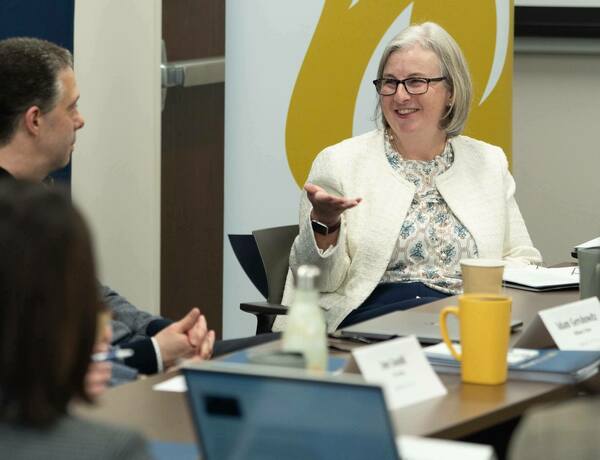
Professor Jennifer Mason McAward, who also directs the Klau Institute for Civil and Human Rights in Notre Dame’s Keough School of Global Affairs, offers the largest-ever examination of Brady violations and possible solutions.
Her article, “Understanding Brady Violations,” published in the Vanderbilt Law Review, presents a detailed and nuanced understanding of who suppresses material evidence in criminal cases as well as why, how, where, and how often. McAward’s study confirms that this misconduct is widespread. The paper also identifies many cases in which evidence is mistakenly withheld and where police officers, not prosecutors, suppress the evidence.
By providing unprecedented detail about historical Brady violations, McAward’s study helps promote the integrity of the criminal justice system and compliance with long-settled constitutional rights.
Connecting Charity Law Across Borders: Lloyd Hitoshi Mayer’s International Charity Law Network
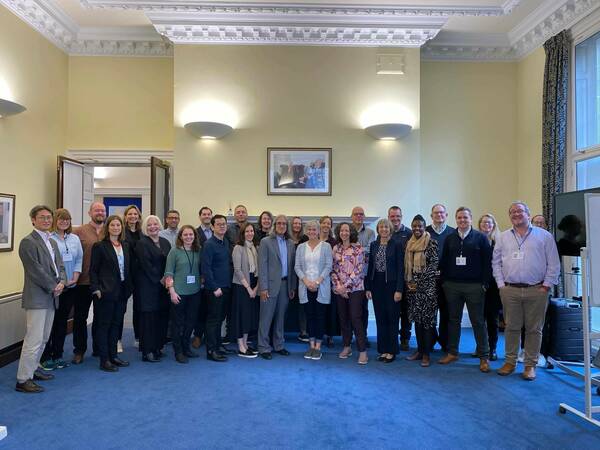
In 2022, thirty international scholars from a dozen countries and five continents gathered at Notre Dame’s London Global Gateway for a charity law workshop. The presentations of works and progress and related discussions confirmed the insights that formed the basis for today’s International Charity Law Network.
The person behind this gathering was Lloyd Hitoshi Mayer, professor of law at Notre Dame, who worked with two leading nonprofit scholars from Australia and the United Kingdom. Mayer had spent years thinking about what it would mean to create a space where academics who study nonprofit and charity law could share ideas across borders. “Most people working in this field focus on their own country’s laws,” Mayer said. “But the challenges charities face, which include questions about tax exemption, political activity, or governance, are surprisingly universal. We needed a way to connect.”
Across borders, nonprofits wrestle with the same perennial challenges. How much can an executive be paid and still be considered charitable? How much political activity should be permitted? How much business activity can be allowed before an organization looks more like a business than a charity?
Layered on top of these enduring debates are twenty-first-century concerns. One is foreign funding: should domestic nonprofits be allowed to receive financial support from abroad, or does that risk improper influence? Dozens of countries, including Israel, India, Russia, and the U.S., have tightened restrictions on charities in recent years. Another is who gets to define “public benefit.” Traditionally, governments allowed charities broad latitude to pursue their missions so long as they weren’t enriching insiders or engaging in partisan politics. But increasingly, governments are demanding alignment with their own policy agendas.
“Russia and China, for instance, welcome charities that fill gaps in social services,” Mayer said. “But they use laws like registration requirements, foreign funding limits, or red tape to suppress organizations that challenge government policies. It’s what scholars call the ‘closing space’ phenomenon, and it’s not just authoritarian regimes. Even in democracies, there’s growing tension over whether charities should have to mirror the government’s idea of public benefit.”
These are the kinds of issues the International Charity Law Network was designed to address. After the London workshop, Mayer and his colleagues set up a website and created an international advisory board. They also developed the world’s first database of global charity law research, now holding more than 750 entries.
By 2024, the network had grown large enough to host its second conference, at York University in Toronto. That meeting expanded beyond scholars to include regulators and practitioners. The next gathering, planned for 2026 in Nairobi, aims to bring together voices from across Africa, where nonprofit law is both rapidly evolving and deeply shaped by local history.
Charity law touches everyday life more than most people realize. “Charities are integral to you and your family’s life,” Mayer said. “They include your church, your kids’ Little League, your alma mater, your hospital. The law of charities is ultimately about protecting the space where these organizations can exist and thrive.”
If the law is good, Mayer argues, societies get a vibrant, independent nonprofit sector. If the law is restrictive, politicized, or hostile, communities lose that space and people are forced to rely more heavily on government or business, which may not meet their needs.
Today, the International Charity Law Network counts more than 30 official “Charity Law Scholars” and nearly 100 participants, including regulators and practitioners. For Mayer, the goal isn’t just to grow the network, but to defend the idea of a robust, independent sector. “Law can be used to create space for charities or to close it. The future of this field is making the case for why societies are better off when citizens are free to come together, even if their vision of the public good doesn’t line up perfectly with the government’s.”
Comparative Administrative Law Workshop
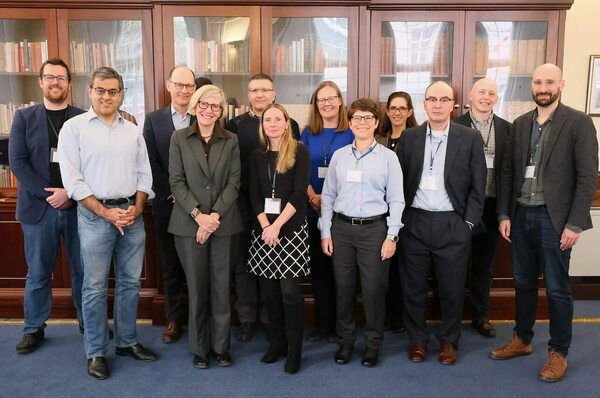
Notre Dame Law School hosted the second Comparative Administrative Law Workshop in September 2025 at Notre Dame London.
Building on the success of the inaugural program in 2024, the workshop—developed and led by Professor Emily Bremer—brought together a dozen administrative law scholars from the U.S. and the U.K. to discuss a range of topics, including theoretical constructs in administrative law, methods of statutory interpretation, standards of judicial review, the role of ombudsmen, and the internal administration of legislative bodies.
The sessions fostered lively transatlantic dialogue and ongoing collaboration in administrative law. Looking ahead, the workshop will continue as a recurring series, rotating among Notre Dame’s global campuses.

Nicole Stelle Garnett: Championing Educational Pluralism and Religious Liberty
Professor Nicole Stelle Garnett has built a distinguished career at the intersection of education law and policy, and religious liberty. In 1996, after clerking for Judge Morris S. Arnold of the U.S. Court of Appeals for the Eighth Circuit, she joined the Institute for Justice, where she helped defend the constitutionality of the nation’s first parental choice programs in Wisconsin and Ohio. There, she also challenged restrictions on families’ use of public funds for faith-based education in Maine, which helped pave the way for the Supreme Court’s landmark decision in Carson v. Makin (2022).
“Throughout my career, I have fought for parental choice and the rights of religious schools to participate in choice programs,” said Garnett. “As an academic, I think one really important inflection point was the publication of my book, Lost Classroom, Lost Community: Catholic Schools' Importance in Urban America (2014), which demonstrated the negative effects of Catholic school closures on urban neighborhoods. This book led me to pivot to writing almost exclusively on parental choice and faith-based schools.”
Garnett has always believed that Notre Dame should be more involved in education policy, especially policies assisting disadvantaged children like parental choice. “Especially now, there are so many opportunities for low-income kids to attend great schools, including Catholic schools. How can we be supportive of that?” she said.
That idea evolved into the Education Law Project, which Garnett founded and now directs. The initiative reflects her lifelong commitment to ensuring families—particularly those in underserved communities—have access to quality education, including faith-based schools. Through research, legal advocacy, and public engagement, the Project works to examine policies that promote or impede educational pluralism in K-12 education, foster a deeper understanding of the benefits of parental choice, and defend the rights of parents to choose where and how their children are educated. Reflecting its growing national impact, the Education Law Project recently filed five amicus briefs in cases related to parental choice.
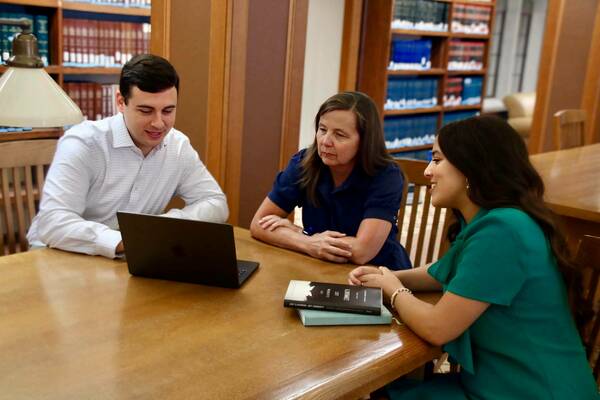
One of the Project’s most innovative undertakings is the Religious Discrimination Tracker, a website developed in collaboration with the Lindsay and Matt Moroun Religious Liberty Clinic and the Orthodox Union’s TEACH Coalition. This ambitious research project identifies state and federal programs that discriminate against religious organizations in a range of funding programs, despite a series of Supreme Court cases holding such discriminatory treatment unconstitutional.
“I think it’s really important that this is an ecumenical project,” said Garnett. “It has been very meaningful to work with the Orthodox Union to advance the equal treatment of religious organizations of all faiths. Our Education Law Fellows made this work possible.”
The Project’s impact extends far beyond the United States, advancing educational pluralism globally, particularly in the Global South. The Project has produced reports documenting how government policies—including both public funding and regulation—shape the operation of private and faith-based schools abroad. Thus far, the initiative has produced a growing collection of scholarly reports in English and Spanish examining national laws and educational systems across Latin America.
The Education Law Project stands as a testament to Garnett’s long-standing commitment to religious liberty, parental choice, and the belief that all families, regardless of faith or socioeconomic status, deserve the opportunity to pursue the education that best serves their children.
“It’s exciting to know that our work with Professor Garnett is supporting justice and equity for families and religious organizations across the country. We're helping to ensure that religious groups are not disqualified from generally available public programs merely for being religious. Notre Dame Law School, the Religious Liberty Clinic, and the Education Law Project have been leaders in religious liberty advocacy and I’m really grateful to be part of this important mission.” - 2L Daniel Lindstrom '19
"As an undergraduate, the opportunity to work with Professor Garnett has been an incredible blessing. It is extremely rewarding knowing the work we are doing will directly benefit families by strengthening parental choice. During the summer, we worked to ensure that families who opt for private and religious schools receive the services they are entitled to under the Elementary and Secondary Education Act of 1965, as reauthorized by the Every Student Succeeds Act (ESSA).” - Undergraduate student fellow Alejandra Ricardo ‘26

Faculty Present Private Law Scholarship in Singapore
In early August, four Notre Dame Law professors helped strengthen the Law School’s strategic partnerships in Asia.
Professors Paul Miller, Rev. Patrick Reidy, C.S.C., Sadie Blanchard, and Patrick Corrigan participated in leading private law workshops at two of Asia’s top universities—the National University of Singapore (NUS) and Singapore Management University (SMU).
At NUS, Professor Miller led the Law School’s delegation at the Oxford Studies in Private Law Theory Workshop, where scholars from universities around the world presented original work in private law theory that will be published in Oxford Studies in Private Law Theory, Volume IV.
The SMU Yong Pung How School of Law hosted the SMU-Notre Dame Commercial and Private Law Workshop, a joint roundtable that highlighted new scholarship from both institutions, including contributions from Notre Dame Law professors Corrigan, Blanchard, Rev. Reidy, C.S.C., and Miller.
Beyond the exchange of scholarship, Notre Dame Law School’s visit to Singapore advanced the Global Lawyering Initiative to expand opportunities for international collaboration, research, and faculty and student engagement.